


Camping Mattresses
Self-inflating mattresses with thick foam and a built-in pump, single or double.
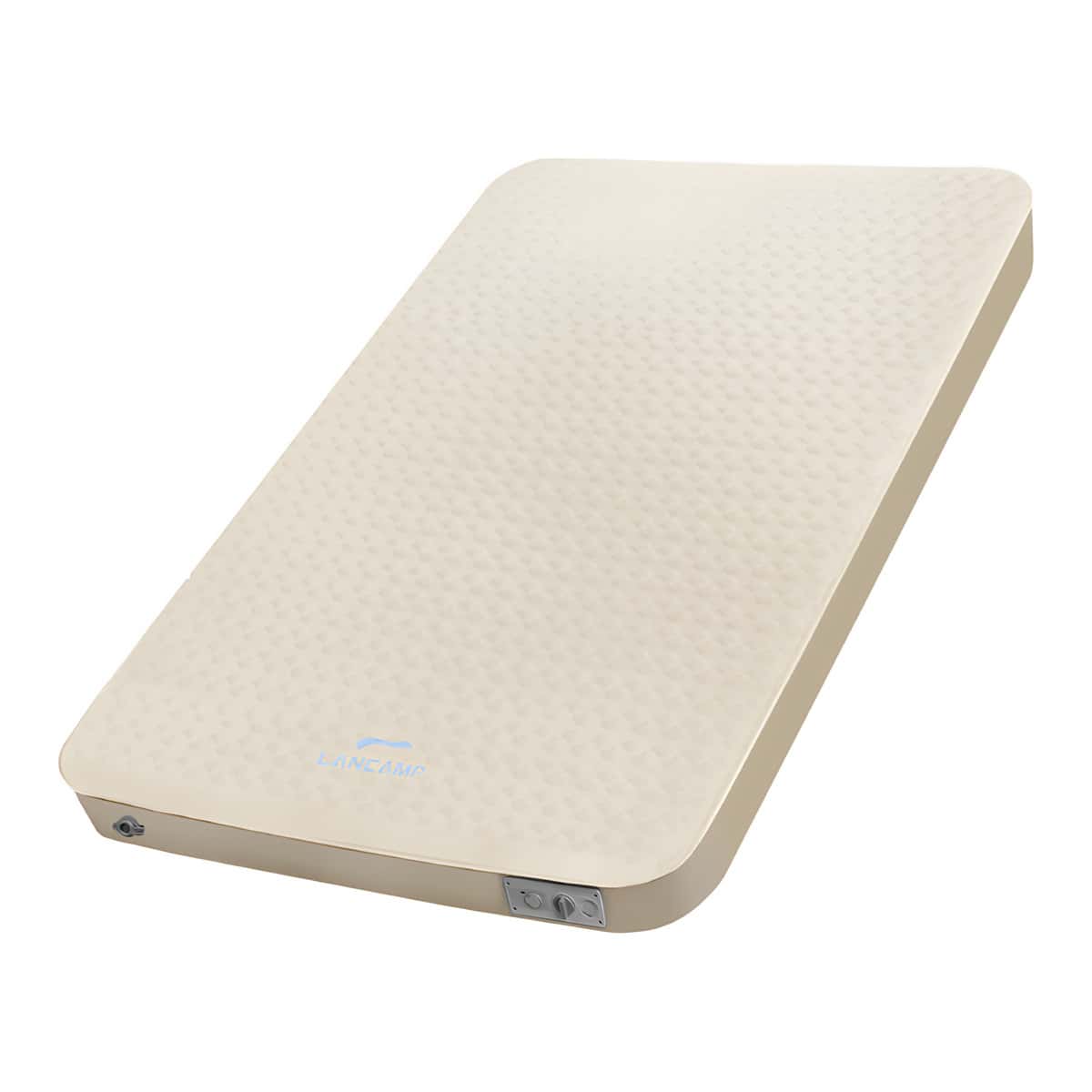
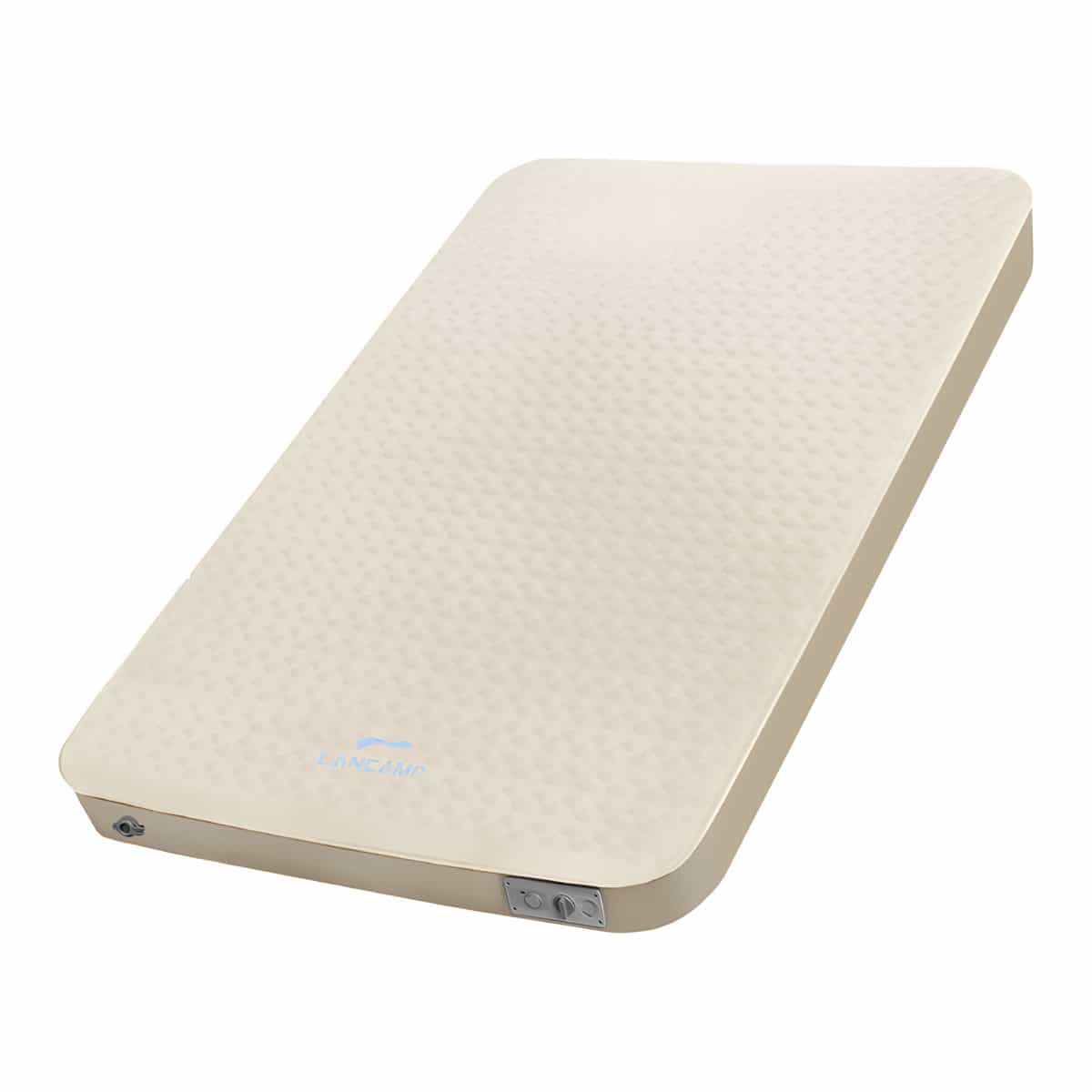
Choose a camping mattress by three things: the type, the thickness and the insulation from the ground. A thin foam pad is light to carry but you feel every stone, an air mattress is comfortable but cold and tends to go down overnight, and a self-inflating mattress combines foam and air, so it gives both support and insulation. For car camping, glamping and guests at home, choose a thick mattress of 8 to 10 cm (3 to 4 in); for a hiking trip, a lighter, thinner one. Our Dolomiti is a self-inflating mattress with 10 cm (4 in) of foam and a built-in pump, single at 200 x 73 cm (79 x 29 in) or double at 200 x 132 cm (79 x 52 in).
Self-inflating, air or foam mattress?
A foam pad, rolled or folding, is the cheapest and lightest; it cannot puncture and needs no inflating, but it is thin and bulky in a bag. An air mattress is high, comfortable and packs small, but the air inside cools during the night and passes the ground's cold to you, and a small puncture leaves you on the ground. A self-inflating mattress is foam inside a sealed cover: open the valve and the foam expands and draws air in, so it supports you like a foam pad and insulates better than an air mattress. A built-in pump cuts inflating and deflating to under a minute, with no external pump.
Thickness and insulation: what R-value means at night
The R-value measures how well a mattress blocks the cold rising from the ground; the higher it is, the warmer the mattress. A low value is enough for summer nights, spring and autumn call for a medium value or more, and winter for a high one. Thickness matters too: 10 cm (4 in) keeps your body off the ground and spreads your weight, so you can sleep on your side without your hip and shoulder touching the ground. The maker of Dolomiti gives an R-value of 10.7.
Single or double, and car camping or guests at home
A single mattress 60 to 75 cm (24 to 30 in) wide suits one hiker, a teenager, or anyone who wants a mattress of their own. A double 120 cm (47 in) wide or more suits a couple or a parent with a child, and avoids the gap that opens between two singles in the night. For car camping, weight matters less, so choose the thickest and most comfortable. A thick self-inflating mattress also works as a guest bed at home and rolls back into the closet when they leave.
Frequently asked questions
Which camping mattress is best for trips?
For car camping, glamping and family weekends, a self-inflating mattress 8 to 10 cm (3 to 4 in) thick, because it is as comfortable as a bed and insulates from the ground. For a long hike, a light, thin mattress that packs small. A simple foam pad suits a small budget when comfort is not the priority.
What is the difference between a self-inflating mattress and an air mattress?
A self-inflating mattress has foam inside that expands and draws in air, so it supports you and insulates from the cold even if the air pressure drops a little. An air mattress is air only: it is high and packs small, but it is colder at night and relies entirely on not leaking.
What is the R-value of a camping mattress?
It measures how well the mattress insulates from the cold rising from the ground. The higher the number, the warmer the mattress. A low value is enough for summer, and spring, autumn and winter call for a higher one.
What thickness is most comfortable?
For most people 8 to 10 cm (3 to 4 in) feels like a bed, especially side sleepers. A thin 3 to 5 cm (1.2 to 2 in) mattress is lighter to carry and suits hikes, but you feel the ground through it.
How do I inflate a mattress with a built-in pump?
On Dolomiti, turn the dial on the side one way and it fills, the other way and it empties for packing. The maker says it takes about 45 seconds, with no external pump. Do not overinflate it.
Can I use a camping mattress for guests?
Yes. A thick double self-inflating mattress is comfortable to sleep on at home, and a non-slip base keeps it in place on wood or tile floors. Afterwards, deflate it, roll it up and put it back in its bag.
How do I look after a self-inflating mattress?
Dry it well before packing it, and between trips store it flat or loosely rolled with the valve open so the foam stays springy. Clean it with a damp cloth.
Guides
Guides to help you choose
What to know before you buy: tips and guides from the Camel Mountain team.
Two Weeks in Thailand: Big Suitcase or Carry-On and Backpack?
Bangkok, the north and the islands in two weeks: when a carry-on and backpack are enough, when a 24 inch that stays at the hotel makes sense, and what to check on domestic flights.

New York in Winter for a Week: Which Suitcase and How to Pack a Coat
A winter week in New York: why a 24 inch is usually enough, what to do with your coat and boots, how to shrink thick sweaters, and how to leave room for shopping.
Two Weeks in Japan: Which Suitcase to Take and How to Pack
Two weeks in Japan means trains and a new hotel every few days. Why a 24 or 28 inch suitcase under 160 cm is the easy choice, what to pack by season, and how to leave room for shopping.
Luggage on the Shinkansen: Japan's Train Suitcase Rules and How to Plan
Up to 160 cm you board without a reservation, from 161 to 250 cm you need a seat with an oversized baggage area, and without one you pay 1,000 yen. All the Shinkansen luggage rules, and how to send a suitcase ahead.