
How Much Weight Should a Child Carry in a School Bag? A Guide for Parents
October 23, 2026

According to the common recommendations of pediatric and physical therapy associations around the world, a child's school bag should weigh no more than 10% to 15% of their body weight. For example, a child weighing 30 kilograms should carry a bag with a maximum weight of between 3 and 4.5 kilograms at most, including books, notebooks, a pencil case and a water bottle.
Table of recommended weights by age and grade
To make the everyday calculations easier, we've put together a simple table showing the common, recommended weight ranges for children and teenagers to carry. The figures are based on healthy average body weights and on the 10% to 15% rule common in ergonomics and health.
| Grade range | Estimated average body weight (kg) | Recommended bag weight (10% of body weight) | Maximum bag weight (15% of body weight) |
|---|---|---|---|
| Grades 1 to 2 | 20 to 26 kg | 2.0 to 2.6 kg | 3.0 to 3.9 kg |
| Grades 3 to 4 | 27 to 35 kg | 2.7 to 3.5 kg | 4.0 to 5.2 kg |
| Grades 5 to 6 | 36 to 45 kg | 3.6 to 4.5 kg | 5.4 to 6.7 kg |
| Grades 7 to 9 (middle school) | 46 to 60 kg | 4.6 to 6.0 kg | 6.9 to 9.0 kg |
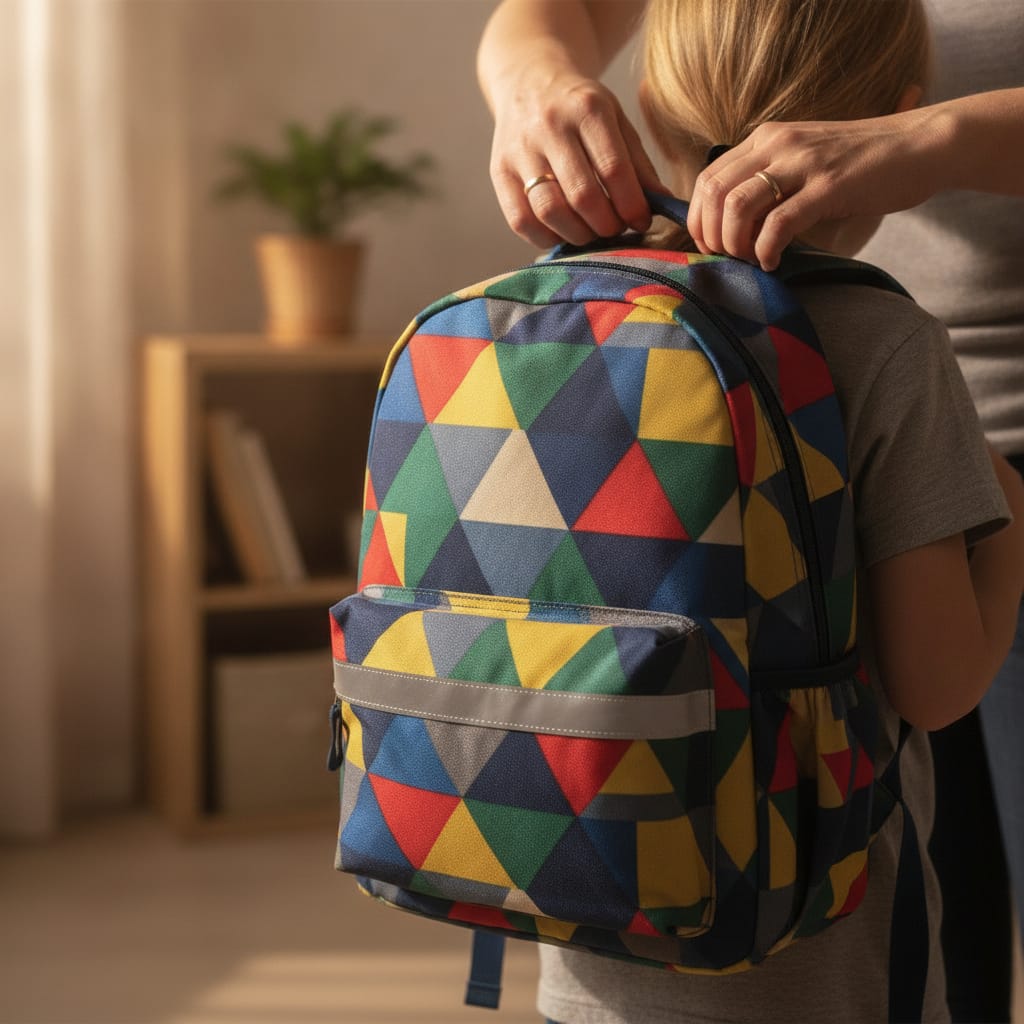
How to weigh the bag and spot one that's too heavy at home
The simplest way to know whether your child's bag exceeds the recommended weight is to do a quick check at home with a regular digital bathroom scale. Don't guess: many parents are surprised to find the bag weighs almost twice what they estimated at first glance.
To weigh the bag accurately, ask the child to step on the home scale without the bag and write down the result. Then ask them to step on the scale again while wearing the bag on their back (packed with everything for the next day). The difference between the two weigh-ins is the exact weight of the bag. Compare the result to the table above to see whether you're in the safe range.
Beyond the bare numbers, there are physical warning signs worth watching for in the daily routine:
- The child leans forward noticeably while walking to balance the weight of the bag.
- Red marks or grooves appear on the child's shoulders after taking off the bag.
- Repeated complaints of shoulder, neck or lower back pain.
- Noticeable difficulty for the child in lifting the bag off the floor and putting it on their back on their own.
A diet for the school bag: what to take out of the bag today
If you've found that the child's bag is too heavy, it's time to put it on a "diet". The bag often becomes a mobile storeroom of unnecessary items that pile up over the weeks and burden the back for no real need.
First, set up a weekly habit of cleaning and organizing the bag every weekend. Take out used papers, old workbooks, snack wrappers and toys that children tend to take to school. Second, check the daily timetable: make sure the child takes only the books and notebooks needed for that specific day, and not all the textbooks for the week.
Another important tip concerns water: a full one-liter water bottle weighs exactly one kilogram, a significant weight for a young child's back. It's best to send the child with a half-full (or even empty) bottle and tell them to fill it at the water fountain or cooler as soon as they arrive at school. Also, prefer simple, light pencil cases over heavy multi-level ones loaded with dozens of markers and colored pencils that aren't used every day.
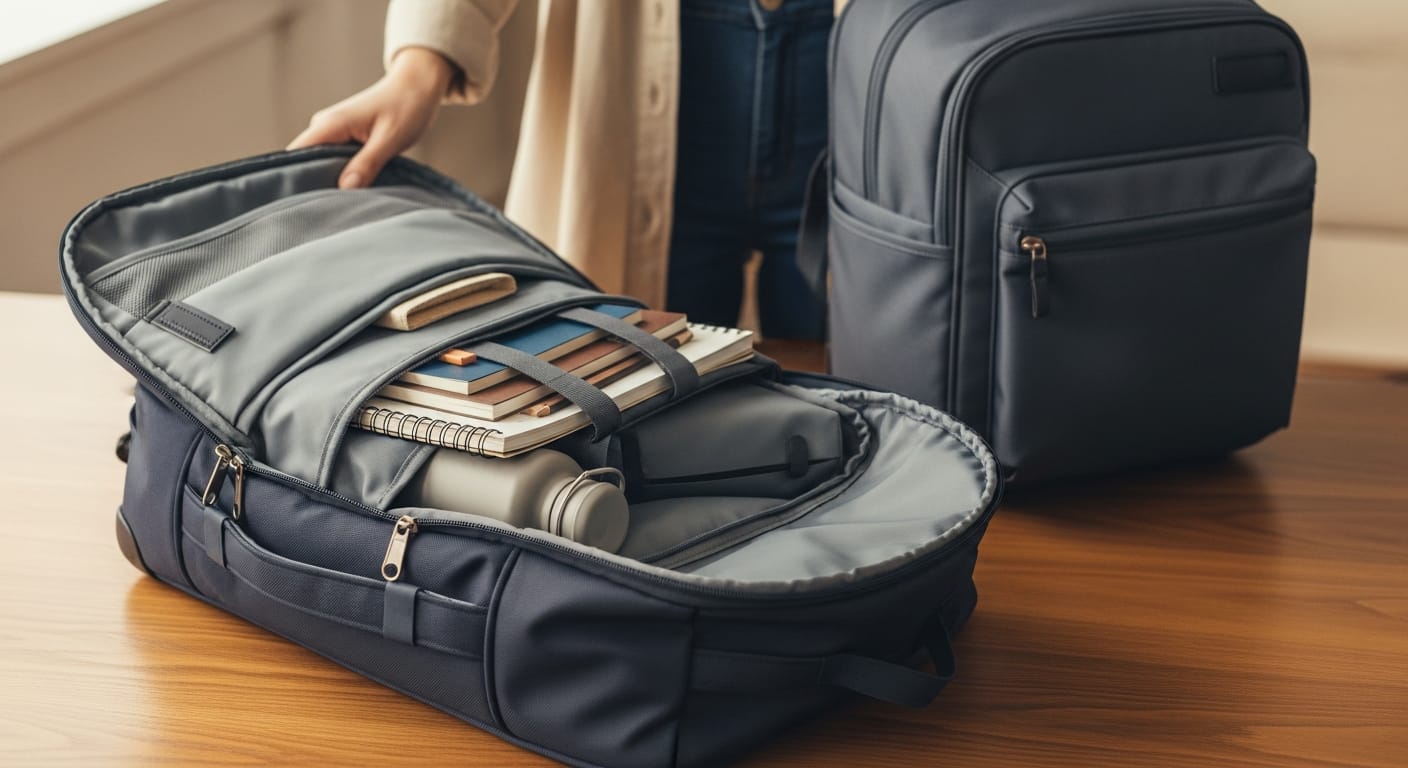
Shoulder ergonomics: how to adjust the straps and the waist belt
Even if the bag's weight is fine, carrying it incorrectly can put unnecessary pressure on the spine and muscles. Adjusting the straps correctly can reduce the feeling of load by tens of percent and prevent cumulative damage.
The first and most important rule is to always carry the bag on both shoulders. Carrying the bag on one shoulder only forces the body to lean sideways to compensate for the imbalance, which creates sharp asymmetric strain on the muscles and skeleton. Make sure the shoulder straps are well padded, wide enough and evenly tightened on both sides.
Adjust the straps so the bag sits close to the child's back. A loose bag that swings or hangs too low (below the waistline) pulls the shoulders and back backward and forces the child to bend forward. The top of the bag should be at shoulder height, and the bottom shouldn't drop below the waistline or the buttocks. If the bag has a chest strap or a waist belt, make sure the child fastens it: it helps transfer a significant part of the weight from the shoulders to the pelvis and legs, which are much stronger and more stable.
How to choose a light, healthy backpack
When you buy a new bag, your starting point should be the weight of the bag when it's empty. Many bags fitted with complex back systems or rigid plastic frames start at a very high weight of their own before the first book is even put in. Choosing a lightweight backpack made of advanced, durable materials gives your child a much healthier and safer starting point.
Here at Camel Mountain, a leading bag brand from a family business operating since 1975, we work hard on developing ergonomic backpacks that combine a minimal weight of their own with maximum durability and smart load distribution. Our bags are designed with a deep understanding of the needs of students and travelers, and come with a full 12-month warranty to give you peace of mind throughout the school year. Investing in a quality, light, well-fitted bag is the best step you can take for your child's back health.
Products to help you on the way


Products in this guide


Frequently asked questions
Is a rolling school bag better than a regular backpack?
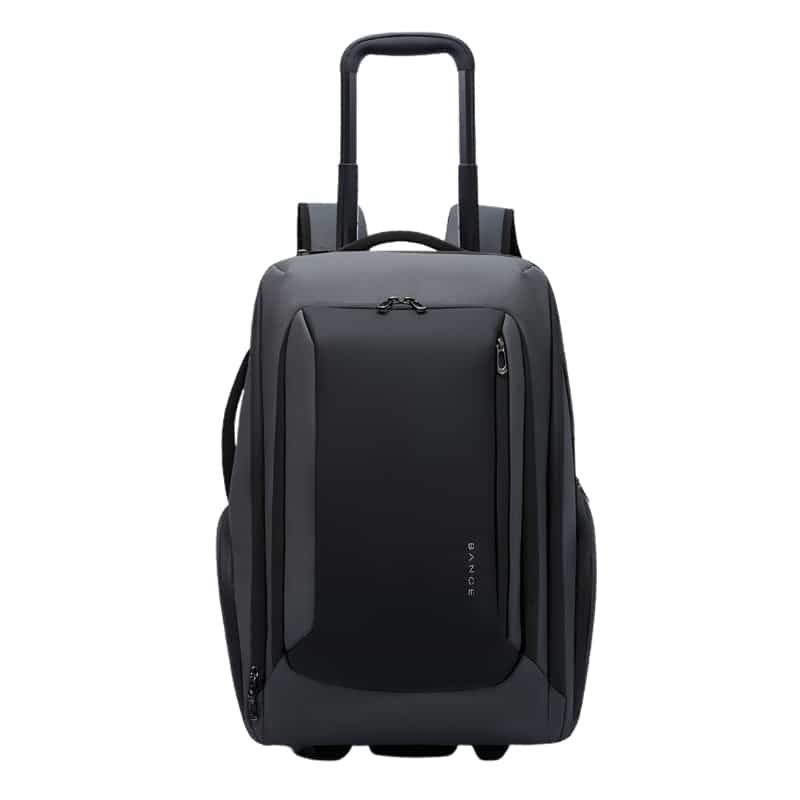
Not necessarily. Although a wheeled bag takes the load off the back while being pulled on a flat surface, it's significantly heavier than a regular backpack because of the mechanism and wheels. When the child has to lift it up the stairs at school or onto a bus, they have to lift a very heavy weight with a twisting motion that isn't healthy for the back.
How should books be arranged inside the bag to reduce the load?
The most important rule for organizing the inside of the bag is to place the heaviest items (such as thick textbooks or a tablet) in the back compartment, closest to the child's back. The closer the weight is to the body's center of gravity, the smaller the force pulling the child backward, and the easier and healthier carrying becomes.
From what age is a waist belt on a backpack recommended?
A waist or chest strap is recommended at any age when the child carries significant weight, starting from first grade. It helps distribute the load evenly and transfers a large part of the weight from the shoulders and upper back to the pelvic bones and the strong muscles of the lower body.
Is back pain in children always related only to the weight of the bag?
The weight of the bag is a significant factor, but not the only one. Back pain in children can also come from prolonged, incorrect sitting in front of screens, a lack of physical activity that strengthens the core muscles, or emotional stress. If the child complains of chronic pain, it's best to consult a pediatrician or a physical therapist.


