
How the Right Suitcase and Backpack Will Save Your Nerves in Summer Airport Lines
October 23, 2026

Choosing a standard-size carry-on trolley and an ergonomic backpack with a trolley sleeve lets you fly with carry-on only, skip the check-in and bag drop lines, and get through security quickly thanks to dedicated compartments for pulling out your laptop and liquids. This combination saves on average an hour and a half of nerve-racking standing in summer lines.
Ben Gurion madness: what we learned from the crisis of lines and lost suitcases
Last summer the Israeli media, led by Yedioth Ahronoth and Ynet, reported total chaos at Ben Gurion Airport. Huge lines that stretched outside the terminal, mountains of suitcases that never reached their destination, and exhausted passengers who spent hours just at the bag drop stage. Those images proved one thing beyond doubt: anyone who relies on sending a large suitcase to the hold at the height of the season is gambling with their time, their nerves and sometimes their belongings.
The most important lesson from that crisis is a complete switch to a carry-on only strategy. When you travel with just a trolley and a quality backpack, you become a completely independent passenger. You skip the longest line at the airport (bag drop), go straight to security with a boarding pass on your phone, and on landing you simply walk out to your vacation while the other passengers wait by the carousel hoping their suitcase survived the journey.
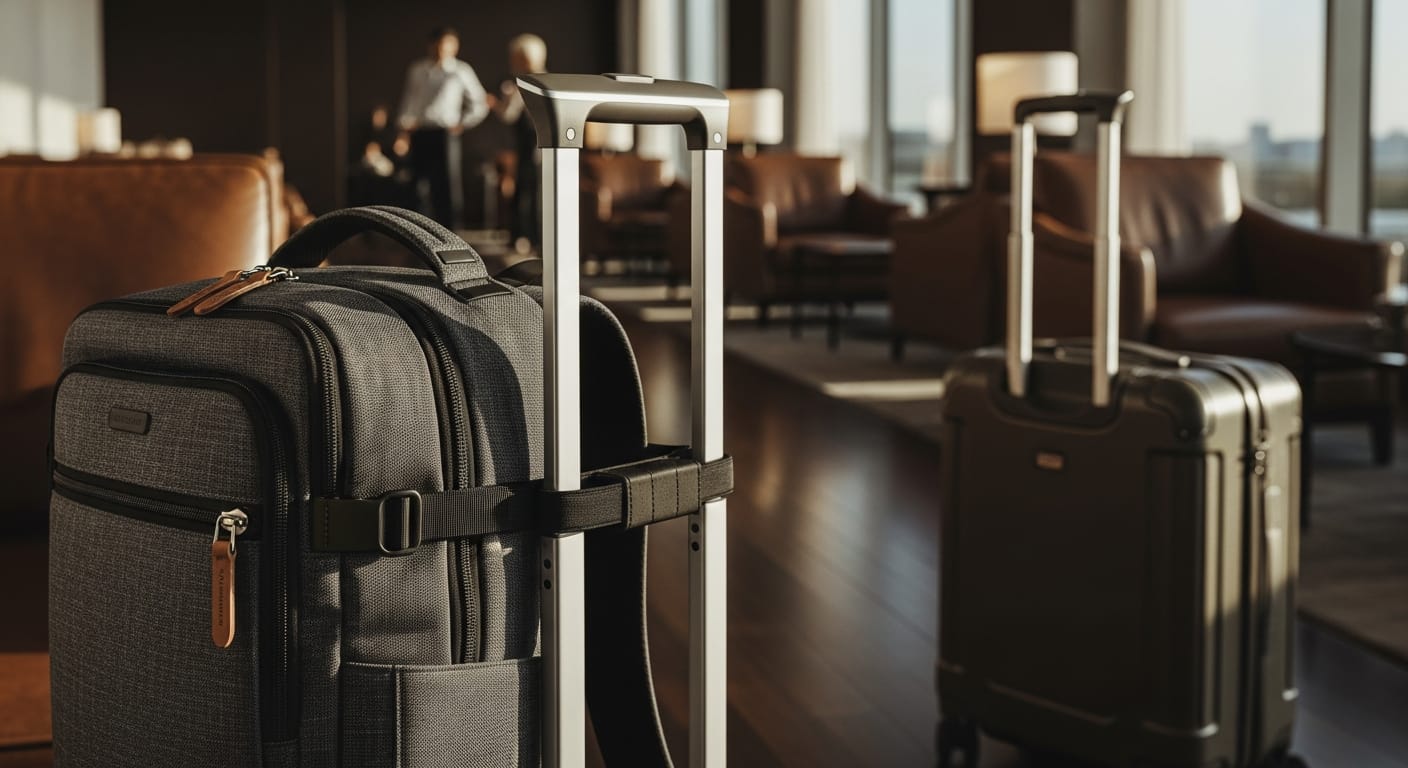
The One Bag strategy: why carry-on is your VIP pass around the line
To apply the fast-flying method successfully, you need to understand the airlines' rules, especially those of low-cost airlines (such as Ryanair, easyJet and Wizz Air). These airlines have turned sizing into an exact science, and they don't hesitate to fine passengers who show up with oversized baggage at the last minute before boarding.
The winning combination is made up of two elements:
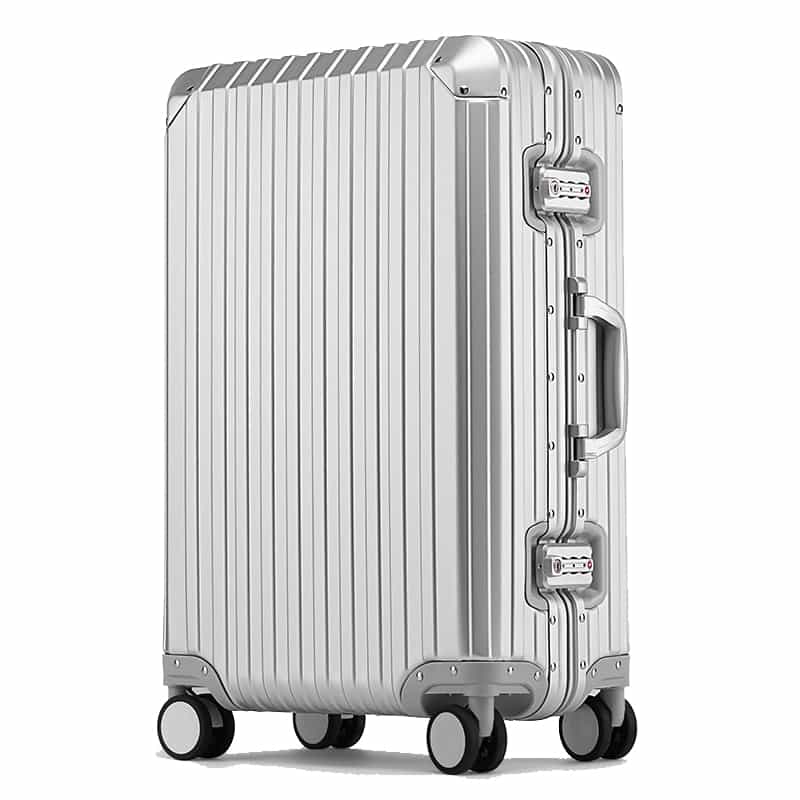
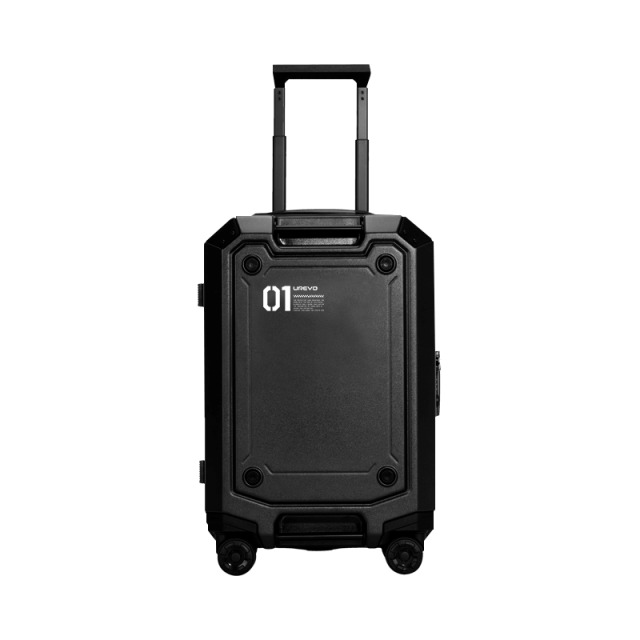
- A hard or soft trolley in standard dimensions (usually 55x40x20 cm): this suitcase goes in the overhead bin. It should be especially light so it doesn't waste precious weight out of the 8 or 10 kg allowed, and have quality silicone wheels that let you move quickly through the airport corridors.
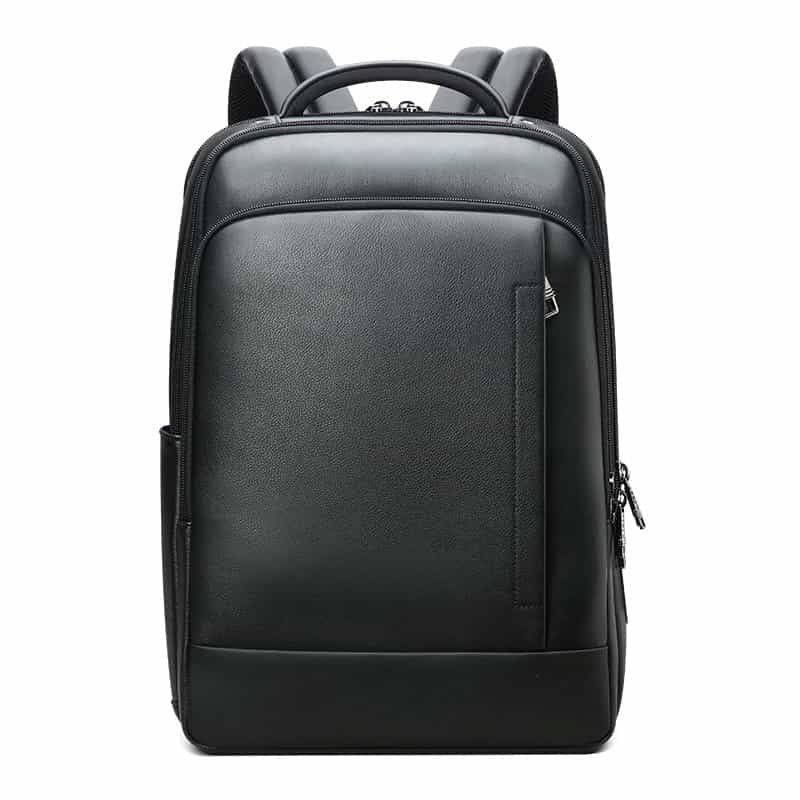
- A personal backpack (underseat bag): a more compact bag (usually up to 40x25x20 cm) that must fit under the seat in front of you. This is your most important bag, since it holds all your valuables, documents, laptop and medication, and it stays with you and within reach throughout the flight.
When these two items are designed to work together, you save not only the waiting time at check-in, but also the constant worry about losing your suitcase.
The anatomy of a winning travel backpack: what to look for before you buy
Not every backpack is fit to be a flying companion, especially not under summer pressure. A generic school or work backpack can turn into a heavy, clumsy nuisance. Here are the critical features to look for in your next backpack:
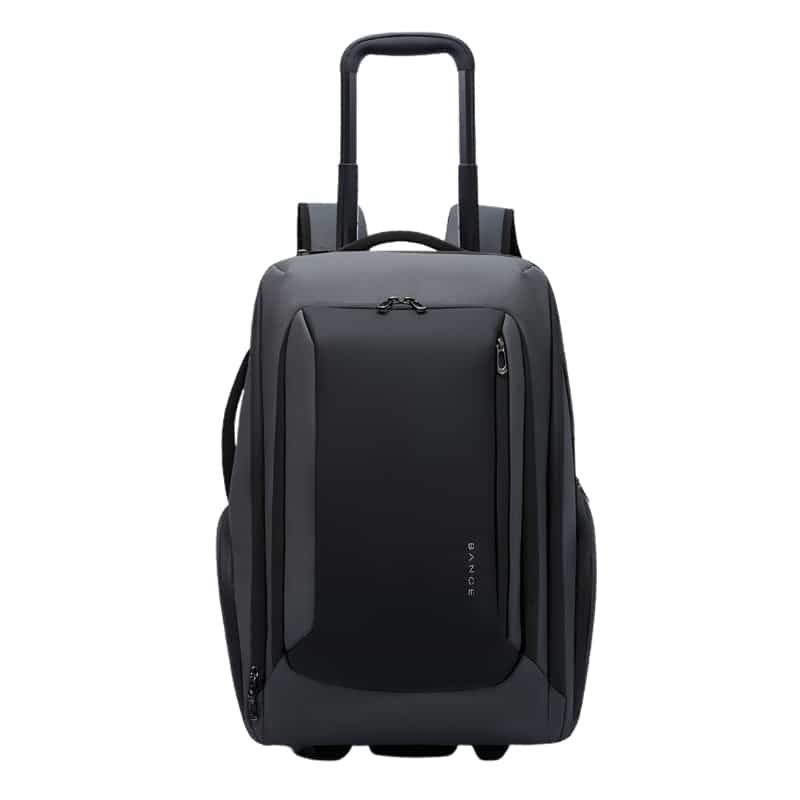
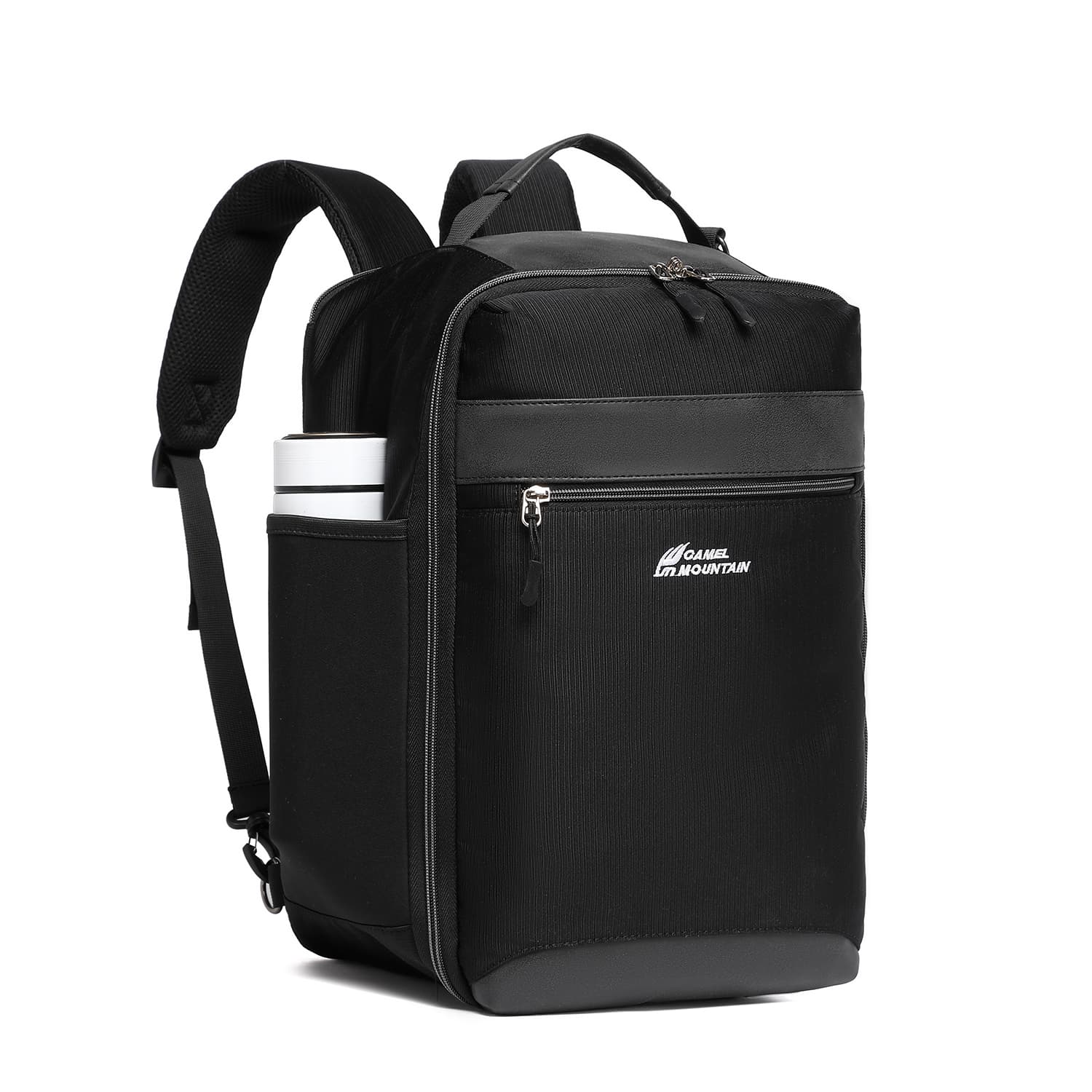
1. Trolley sleeve: a wide strap on the back of the bag that lets you slide it securely over the suitcase's telescopic handle. Instead of carrying weight on your shoulders while standing in long security or passport lines, the bag sits securely on the suitcase and you roll both effortlessly with one hand.
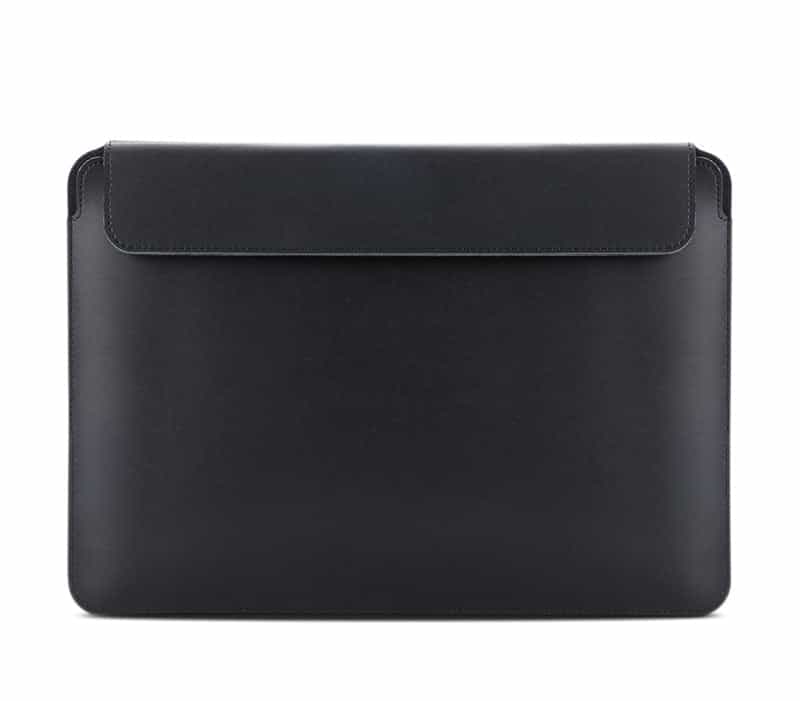
2. A dedicated quick-access laptop compartment: at security you will need to take the laptop or tablet out of the bag and put it in a separate tray. A smart backpack has a dedicated back zipper that lets you pull out the laptop in a second, without opening the main compartment and messing up all your clothes and personal belongings in front of the other passengers in line.
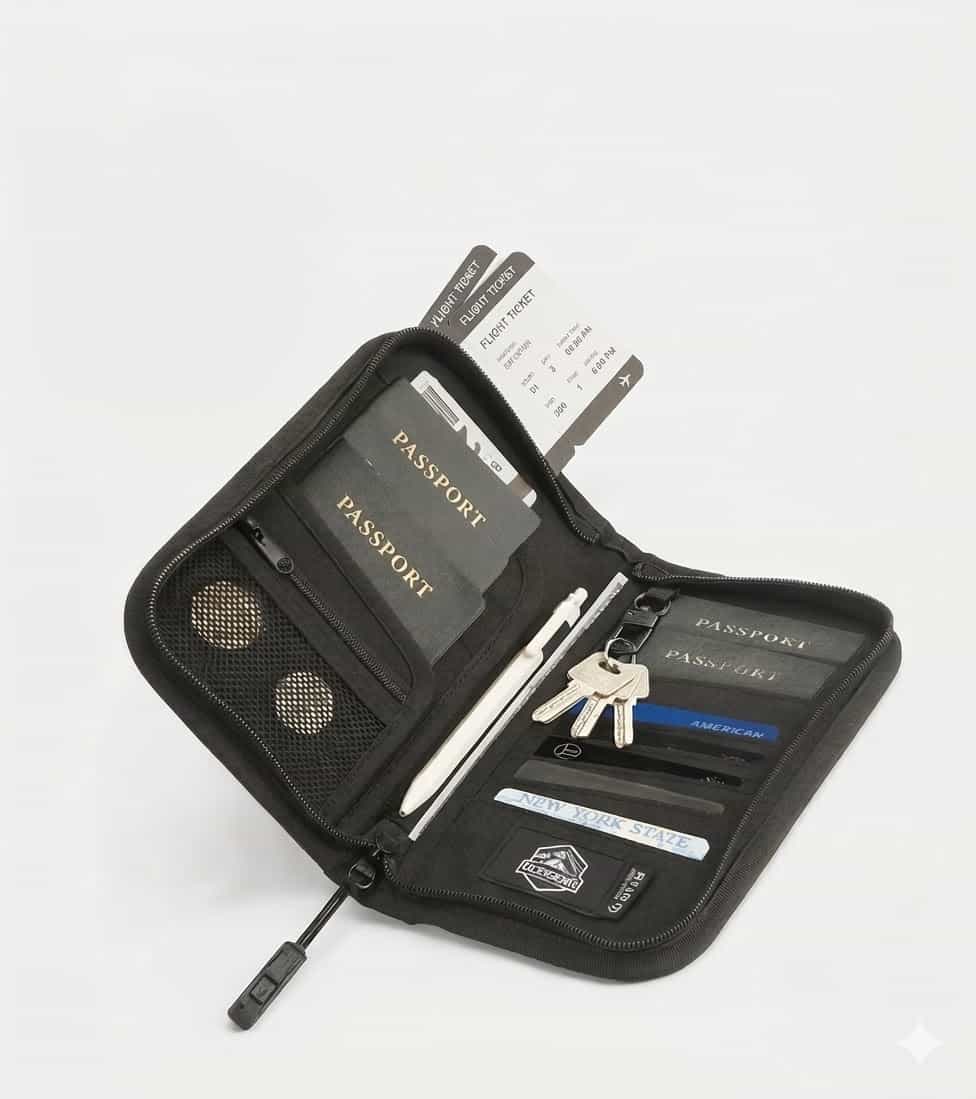
3. Hidden compartments for your passport and wallet: protection from pickpockets in crowded airports is critical. A hidden zippered compartment on the back of the bag (against your body) makes sure your most important documents are completely safe, yet still within reach the moment you need to show them at the boarding gate.
Comparison table: types of baggage and how they affect waiting time at the airport
To make things clear, we have summarized the significant differences between the ways of traveling and how they affect getting through the airport during the busy summer months:
| Type of baggage | Average volume | Estimated waiting time at the airport (out and back) | Mobility and ease of movement | Fit for low-cost flights |
|---|---|---|---|---|
| Large suitcase (checked bag, 28") | 80 to 110 liters | Two to three hours (bag drop lines plus waiting at the carousel) | Low (heavy, needs larger taxis) | Requires a very expensive extra fee |
| Carry-on trolley (20") | 35 to 45 liters | 0 minutes (you skip the check-in line) | Medium to high (easy to roll) | Included with some tickets, or a modest extra fee |
| Dedicated low-cost backpack (underseat) | 20 to 30 liters | 0 minutes (straight to security) | Maximum (hands completely free) | Completely free on all airlines |
The art of smart packing: how to squeeze a whole week into a trolley and a backpack
Many people are sure that traveling with carry-on only means giving up favorite clothes or compromising on how they look on vacation. Reality shows that with the right packing techniques, you can easily pack for a whole week and even longer in a trolley and a backpack.
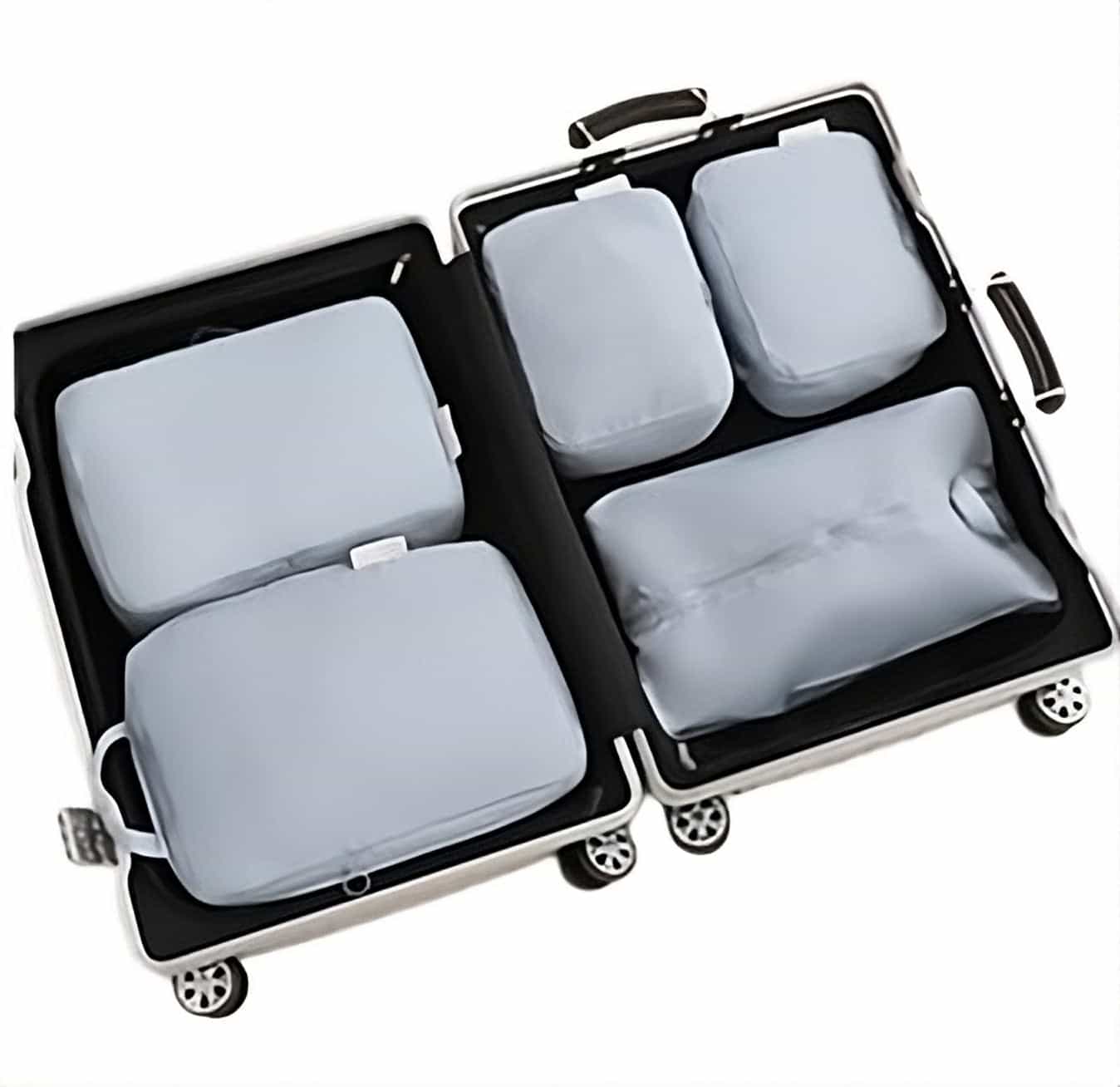
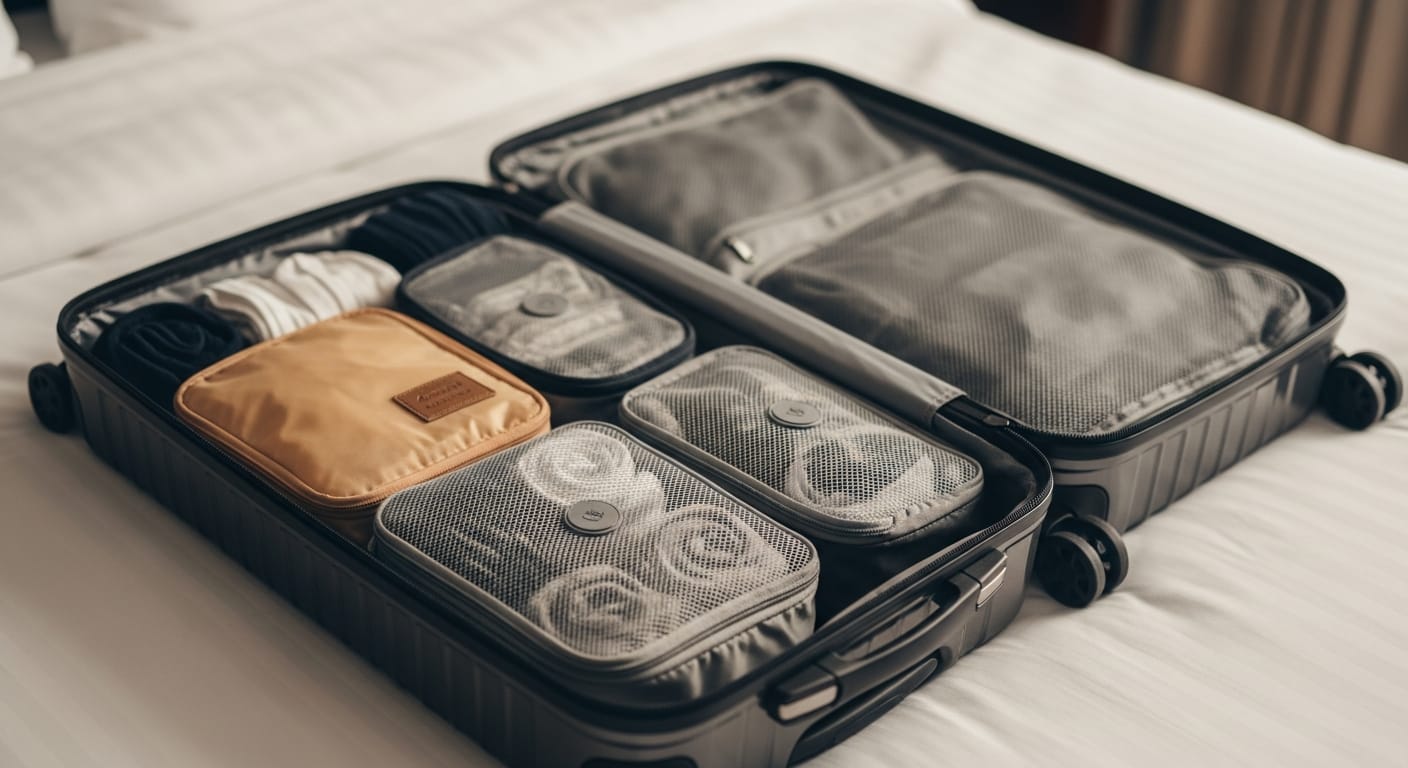
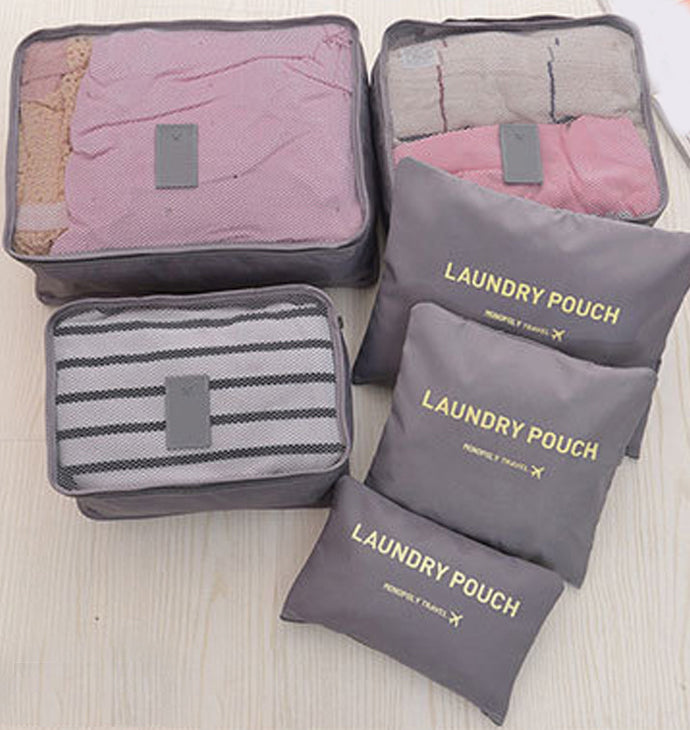
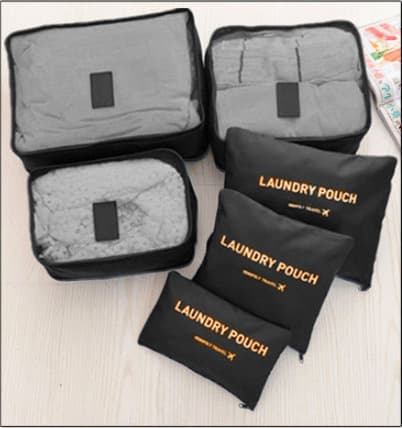
The first secret is using packing cubes. These organizers let you divide your gear by category (shirts, underwear, pants) and squeeze the air out of your clothes. In addition, instead of folding clothes the traditional way, use the rolling method. Rolling clothes prevents wrinkles and saves up to 30% of the space in the suitcase.
Another golden tip for saving time at security: pack all your liquids (creams, shampoo, perfume, all in bottles of up to 100 ml) in one clear bag placed at the top of the backpack. When you reach the security belt, you can pull it out in a second without holding up the line or causing unnecessary drama with the security staff.
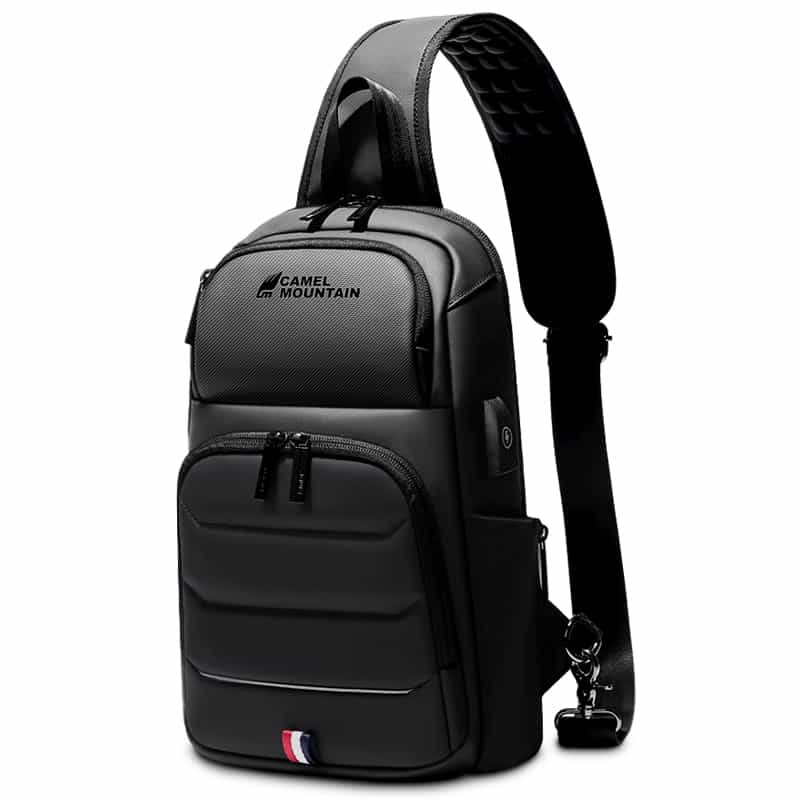
Camel Mountain, the brand of a family business that has been accompanying travelers since 1975, develops smart, durable and lightweight carrying solutions for exactly these challenges, so you can focus on what really matters and enjoy the journey and your summer vacation without worry or unnecessary stress.
Products to help you on your way

Products in this guide
Frequently asked questions
What carry-on dimensions do most airlines allow?
Most full-service airlines (such as El Al) allow a carry-on trolley of up to 56x45x25 cm. On low-cost airlines such as Ryanair or easyJet, the basic ticket includes only a small backpack that goes under the seat (usually up to 40x25x20 cm), and a larger trolley costs extra.
How does a trolley sleeve on a backpack help in lines?
The trolley sleeve lets you slide the backpack directly onto the suitcase's telescopic handle. That takes all the weight off your shoulders and back while standing in long lines, and lets you maneuver easily and quickly through the crowds with one hand free.
Do packing cubes really save space or are they just for looks?
Packing cubes are a critical tool for saving space. They compress clothes, keep them from spreading around and let you divide the contents by category, which makes it much easier to pull items out at security without messing up the whole suitcase.
What do I do with liquids and my laptop to get through security quickly?
Make sure to pack the laptop and the clear liquids bag (up to 100 ml per item) in the outside compartments of the backpack or suitcase. That quick access keeps you from holding up the line and digging through the depths of your bag in front of hurried security staff.


