
What Goes in Your Carry-On and What Goes in the Big Suitcase? How to Split Your Things
October 23, 2026
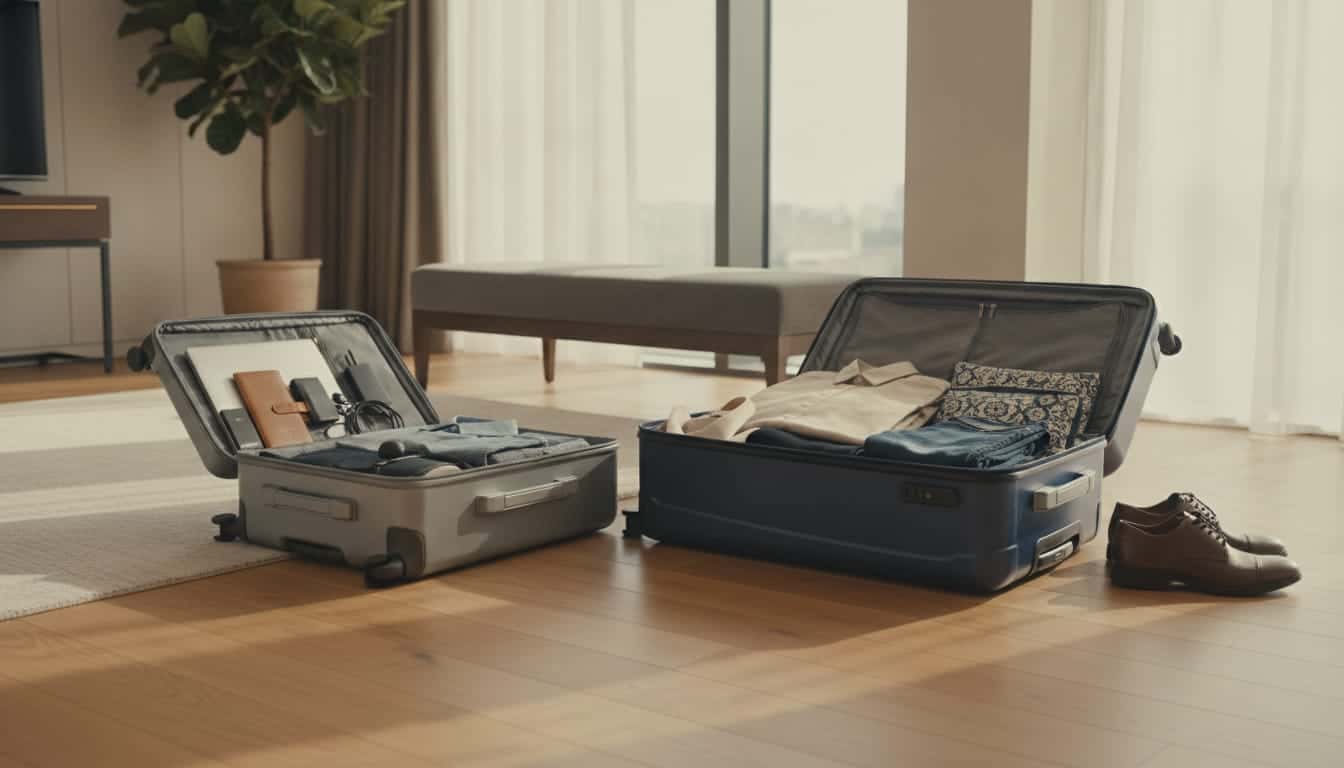
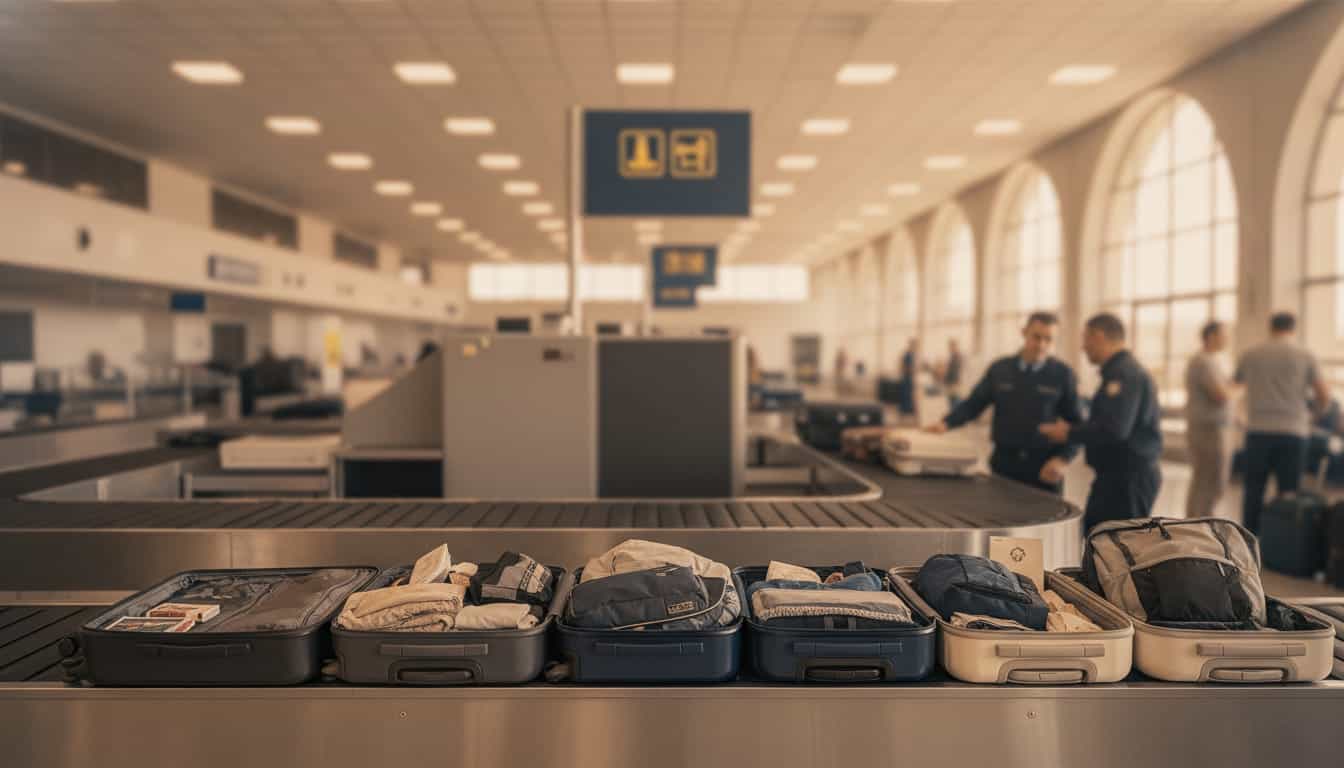
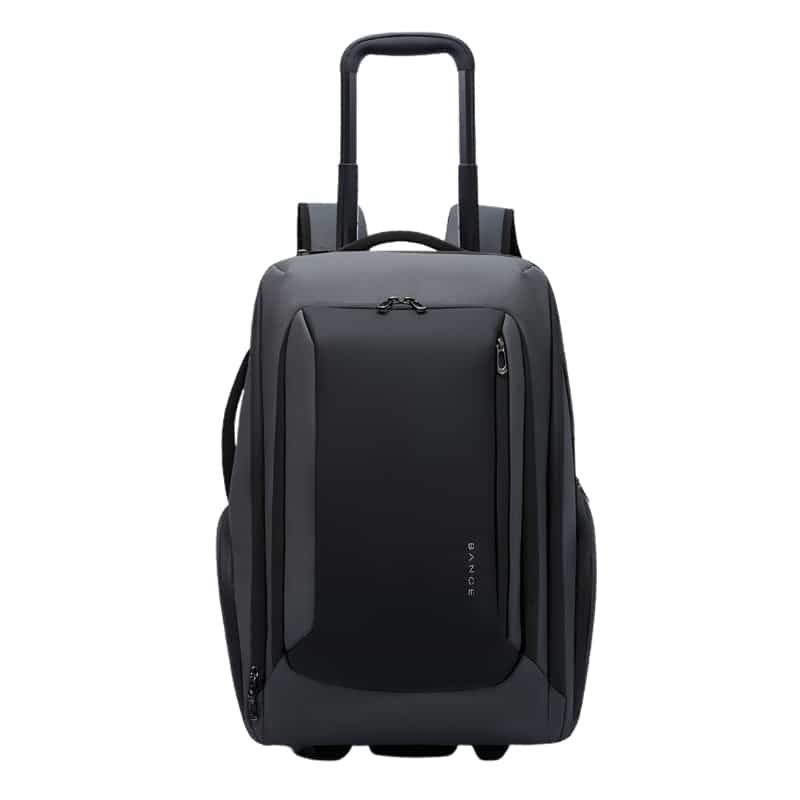
The simple rule: anything you can't do without on the first day travels with you in the carry-on, and everything else goes in the big suitcase. In the carry-on: passports and documents, medication, laptop, chargers and power banks, jewelry and a change of clothes. In the suitcase: liquids over 100 ml, knives and sharp tools, shoes and most of your clothes.
What always goes in the carry-on
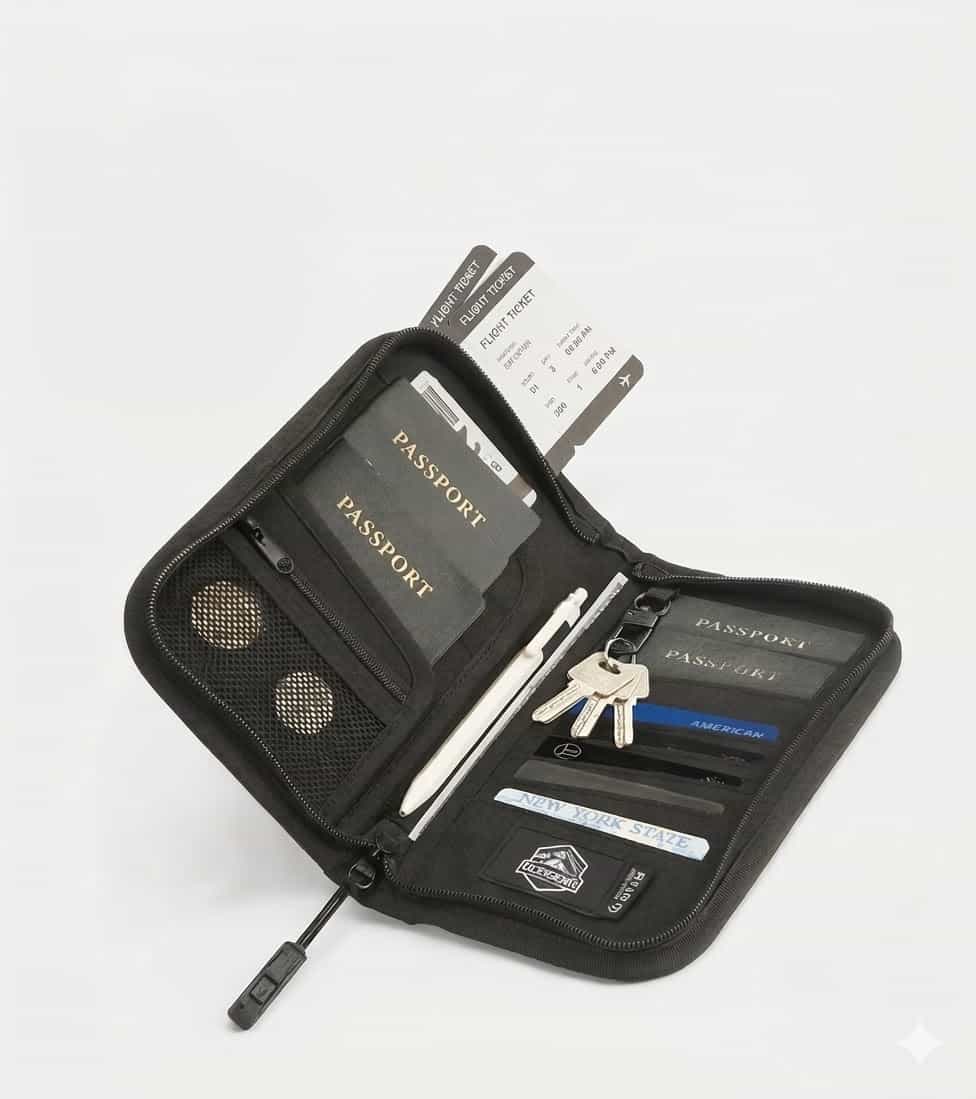
- Documents and money: passports, credit cards, travel insurance and booking confirmations.
- Medication: anything you take regularly, enough for every day and a little extra. A suitcase delayed by a day or two shouldn't leave you without your medication.
- Electronics: laptop, tablet, camera and headphones. IATA, the International Air Transport Association, recommends keeping devices like these in your cabin baggage.
- Power banks and spare batteries: here it's not a recommendation but a requirement. These batteries are allowed only in cabin baggage, never in the checked suitcase.
- Valuable or fragile items: jewelry, glasses and anything hard to replace.
- A first-day kit: a change of clothes, a swimsuit for a summer vacation, a toothbrush and a bandage or two.
Exactly what is allowed through security, including how to pack liquids in small bottles, is covered in our guide to what you can take on a plane in your hand luggage.
What is better sent in the big suitcase
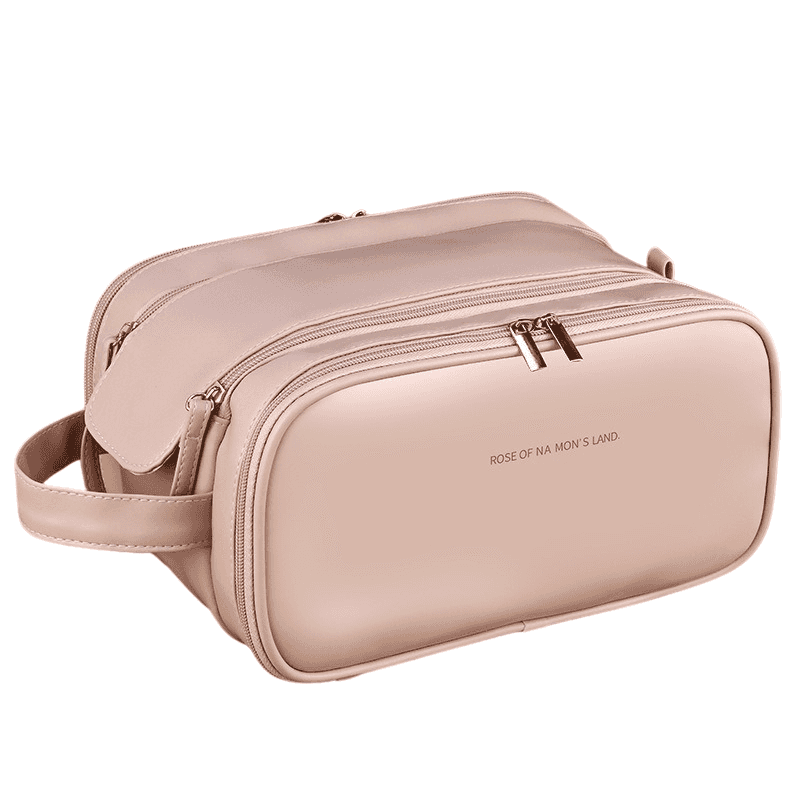
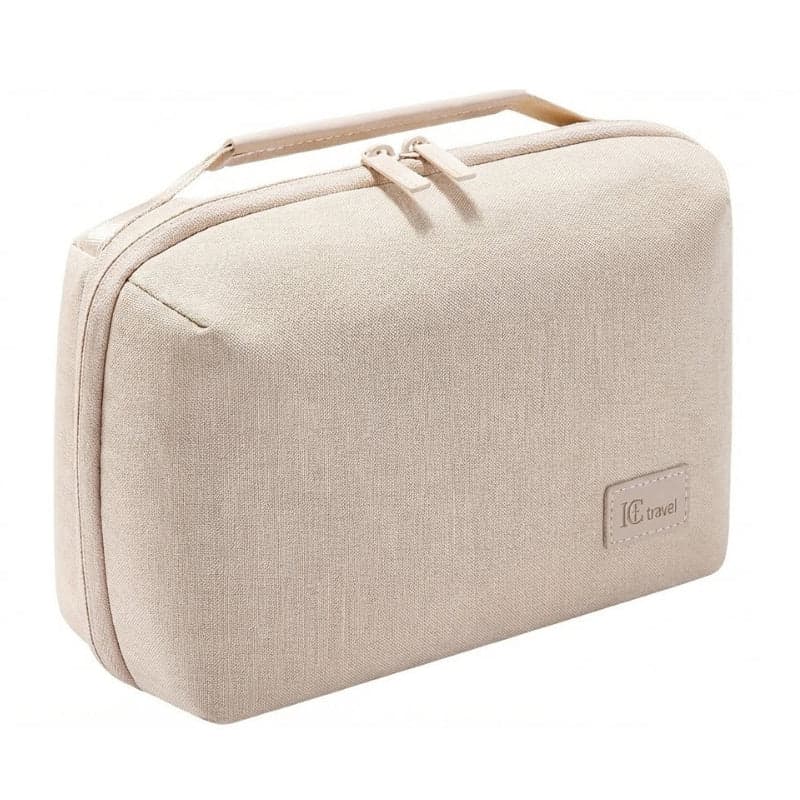
- Liquids over 100 ml: full-size shampoo, sunscreen, a large perfume. Close them tightly and put them in a bag or a closed toiletry bag.
- Sharp items and tools: a knife, large scissors, outdoor tools. Whatever might be stopped at security travels below.
- Shoes and bulky clothes: a winter coat, walking shoes, jeans. They take up the most space and weigh a lot.
- Most of your vacation clothes: anything you don't need on the first day.
Quick table: what goes where
| Item | Carry-on | Big suitcase |
|---|---|---|
| Passports, tickets, money | Yes | No |
| Regular medication | Yes | Only extras |
| Laptop, tablet, camera | Yes | Better not |
| Power bank | Yes | Not allowed |
| Bottles up to 100 ml | Yes | Fine |
| Liquids over 100 ml | No | Yes |
| Knife, large scissors, tools | No | Yes |
| A change of clothes for one day | Yes | Also |
| Shoes, coat, most clothes | No | Yes |
How to arrange the carry-on so security goes fast
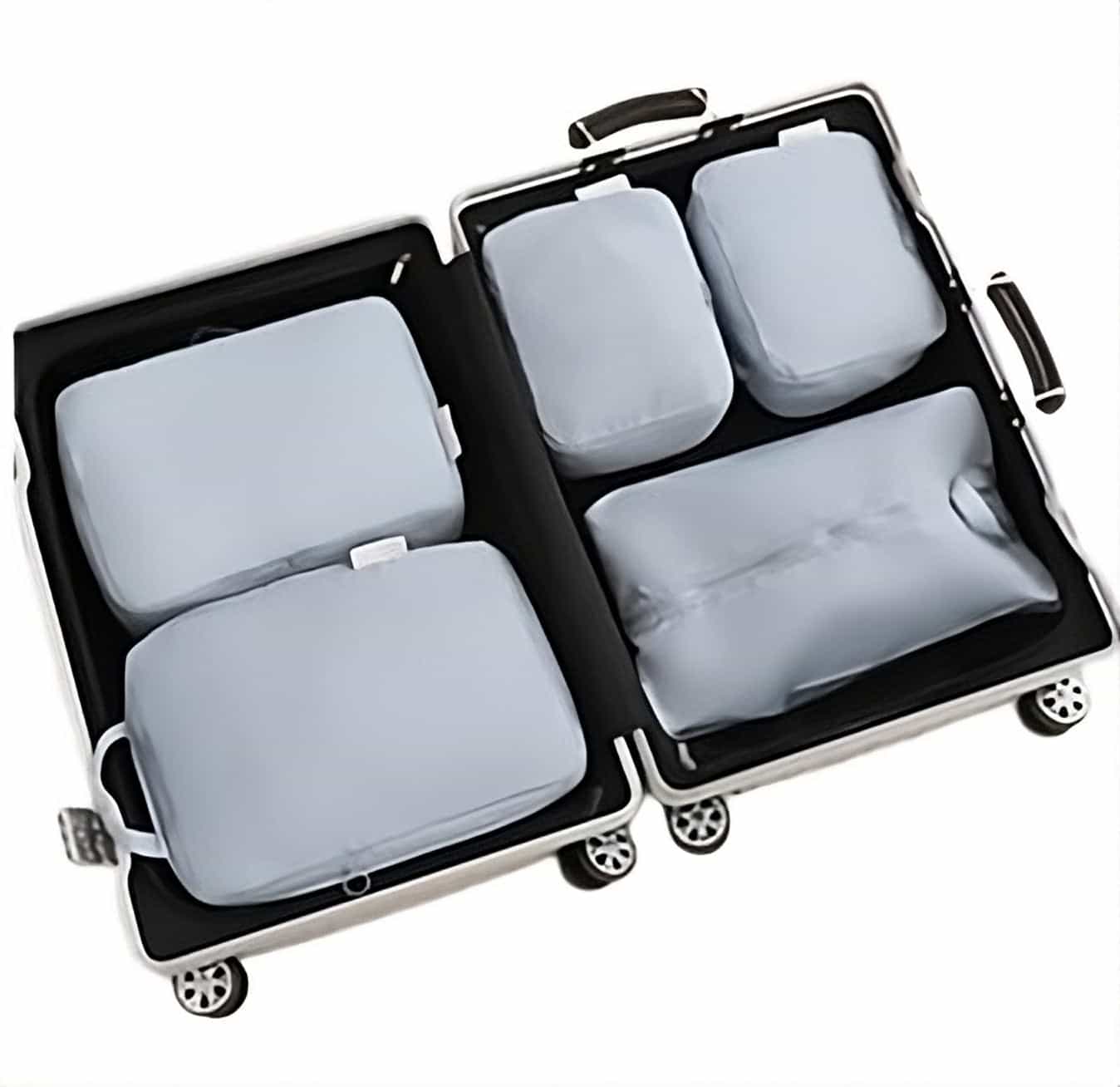
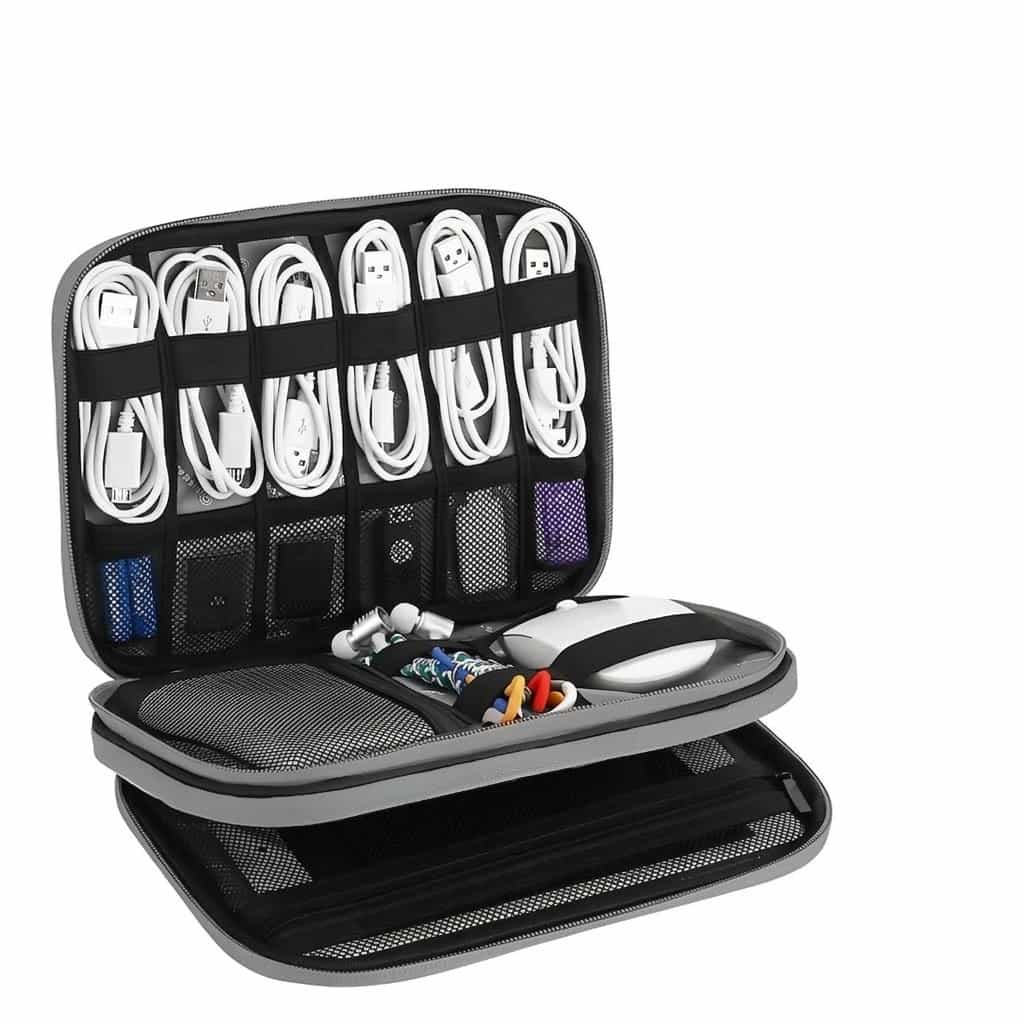
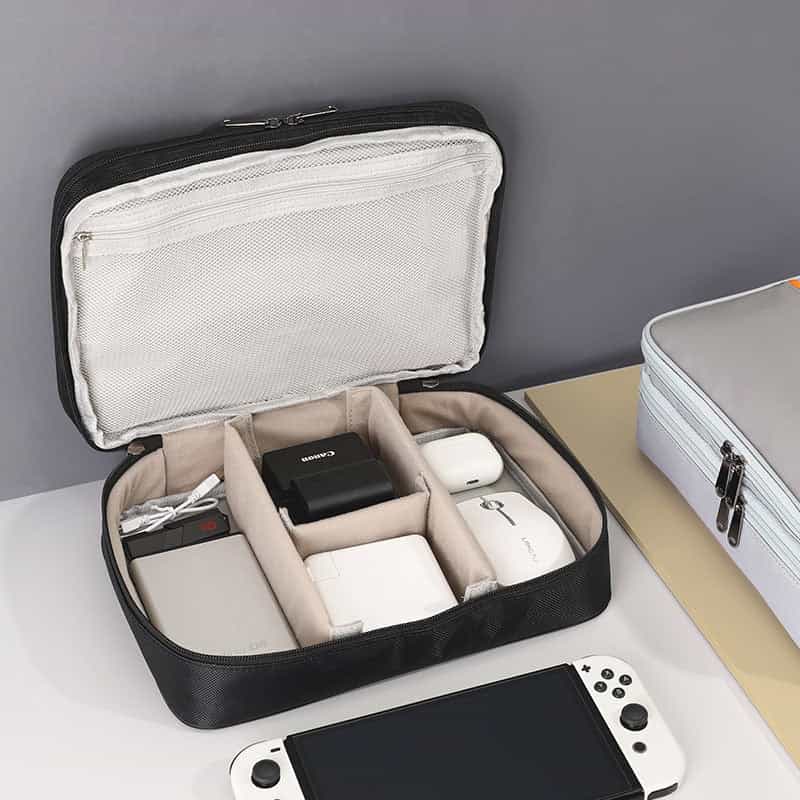
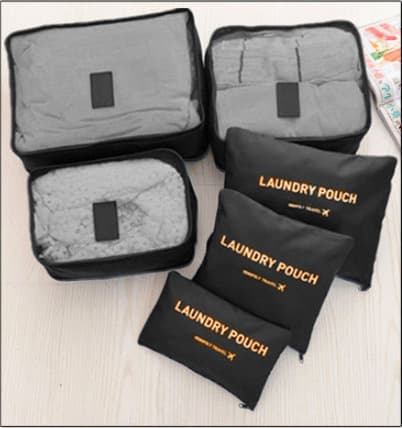
The carry-on is the bag you open most along the way: at security, at the gate and on the plane. What helps is grouping things by type. All the cables, chargers and power banks go into one small organizer, so you can pull them out at once. The small bottles go into one clear bag that sits on top. Documents and medication go in the outer pocket, close at hand. Clothes in both the carry-on and the big suitcase are easy to divide into packing cubes: one cube for shirts, one for underwear and socks, one for dirty laundry on the way home. A good set of cubes weighs little: our River set, for example, six cubes, weighs 340 grams in total.
Got a small bag too? It's for the flight itself
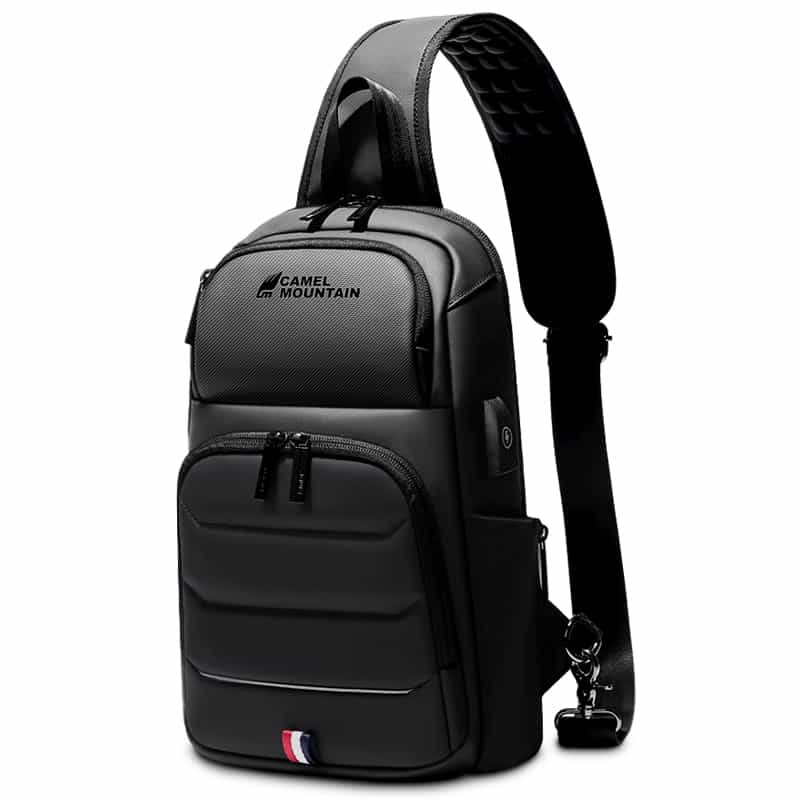
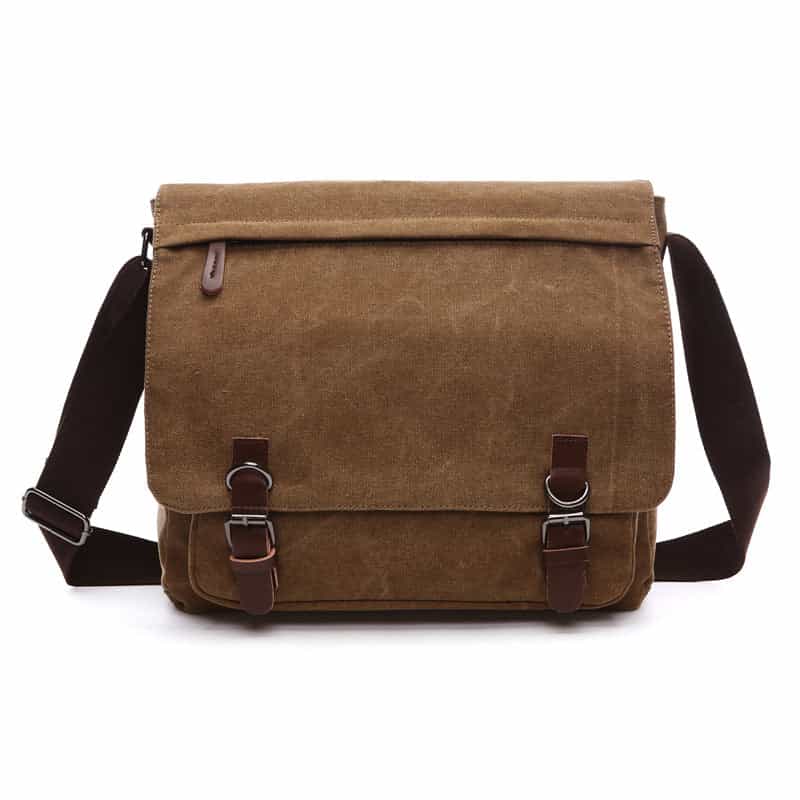
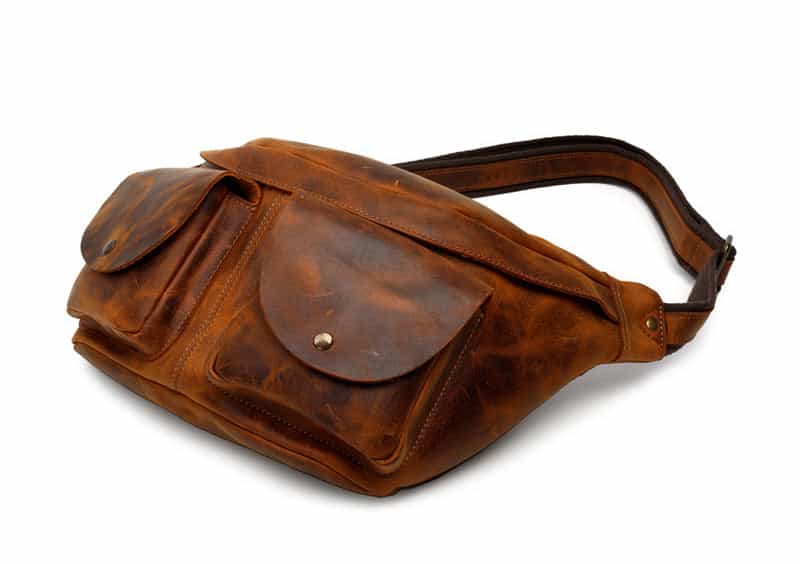
The carry-on goes in the overhead bin, and during the flight it isn't always easy to get up and open it. If your ticket also includes a small under-seat bag, a small backpack or a crossbody bag, put in it what you need during the flight itself: headphones, phone and power bank, any medication you take on the way, glasses, an empty water bottle to fill after security, a snack and a thin sweater for the air conditioning. That way the carry-on stays closed until landing, and its contents don't get messed up every time you look for something.
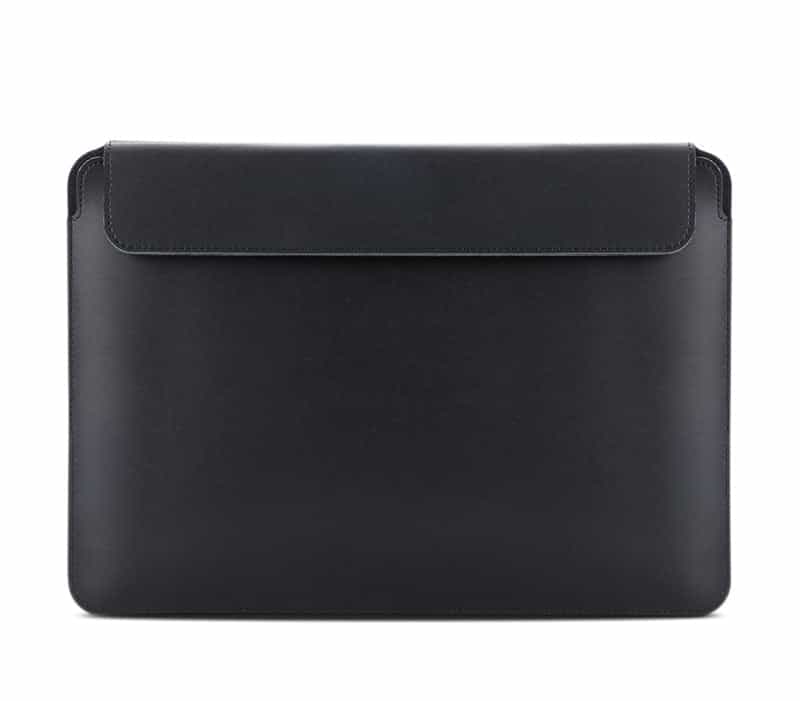
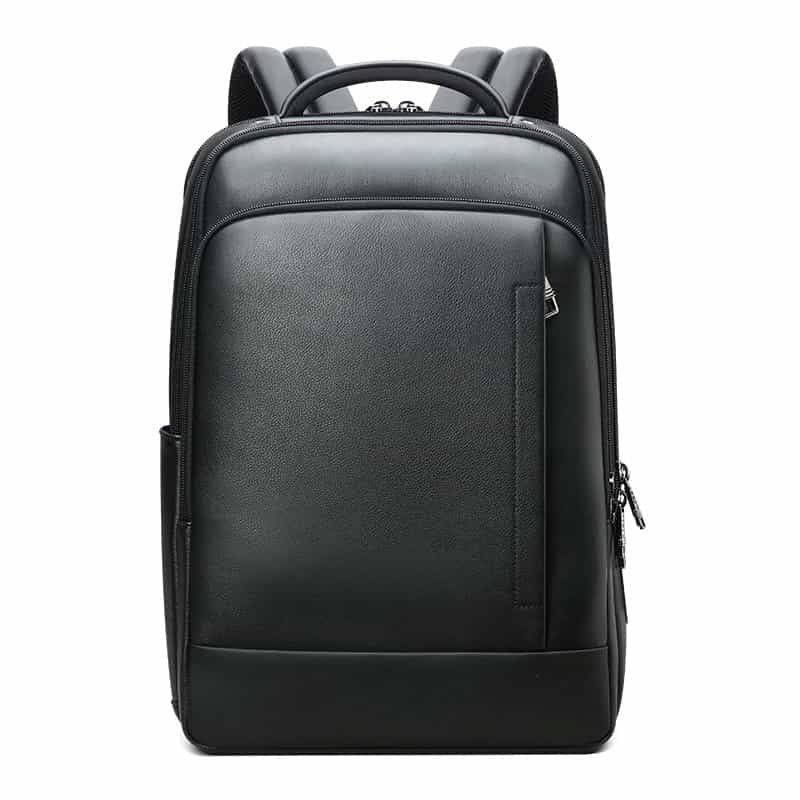
If the small bag is also the one that holds your laptop, choose one with a padded laptop compartment, because it will be lifted and put down many times on travel day.
How to split weight between the two bags
For a checked suitcase the common limit is 23 kg, while the carry-on limit is much lower and varies between airlines: at El Al, for example, the carry-on is limited to 8 kg. So heavy items go in the big suitcase, and the carry-on holds what matters, not what's heavy. Weigh both bags at home, with a luggage scale or a bathroom scale, rather than discovering you're overweight at the counter. All the limits by type of baggage are collected in our guide to suitcase weight on flights.
A small tip for the suitcase itself: put heavy items at the bottom, near the wheels, so the suitcase is more stable and rolls easily.
And on the way back: you almost always come home with more than you left with. Gifts and liquids you bought abroad go in the big suitcase, and weigh it again before you head to the airport.
Flying as a family? Mix clothes between the suitcases
Instead of one suitcase per person, put some of every family member's clothes in each big suitcase. If one suitcase is delayed, nobody is missing everything. Packing cubes in a different color for each child help you find things fast and keep order even when clothes are spread across several suitcases. And every family member's carry-on holds their own small change of clothes.
What to do if the big suitcase didn't arrive or arrived damaged
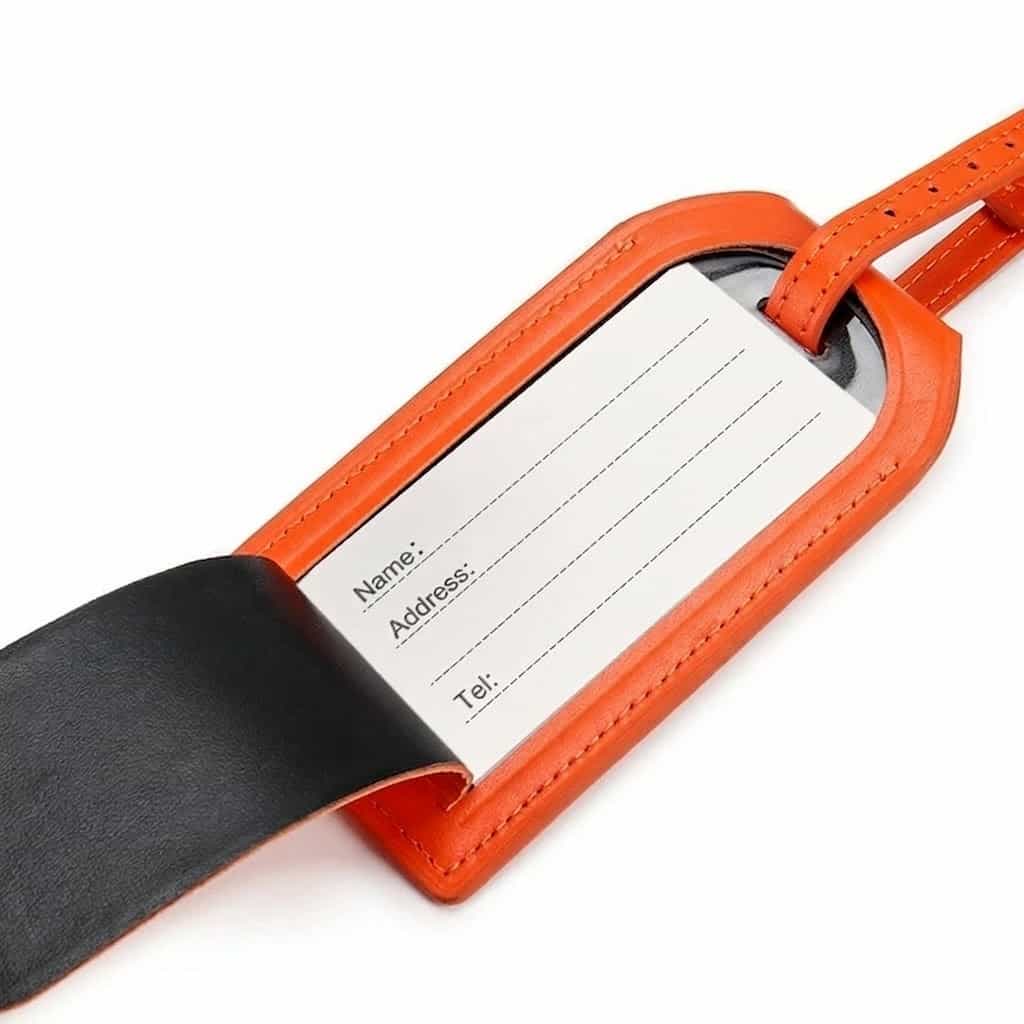
This is where the right split pays off: with medication, chargers and a change of clothes in the carry-on, the first day goes smoothly. Report a missing suitcase before you leave the terminal, at the lost and found desk or the airline's desk. The same goes for a suitcase that arrived damaged: fill out a damage report there and photograph the suitcase, the baggage tag and your boarding pass. Damage caused while the airline handled your bag is the airline's responsibility, and without that report it is very hard to get compensation.
Before you pack: what does your ticket include?
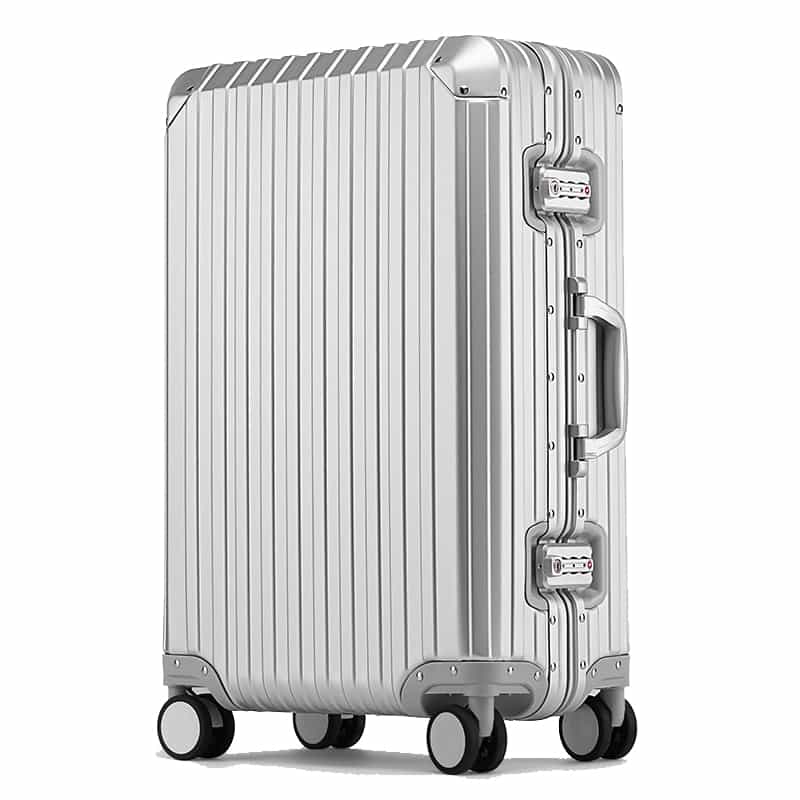
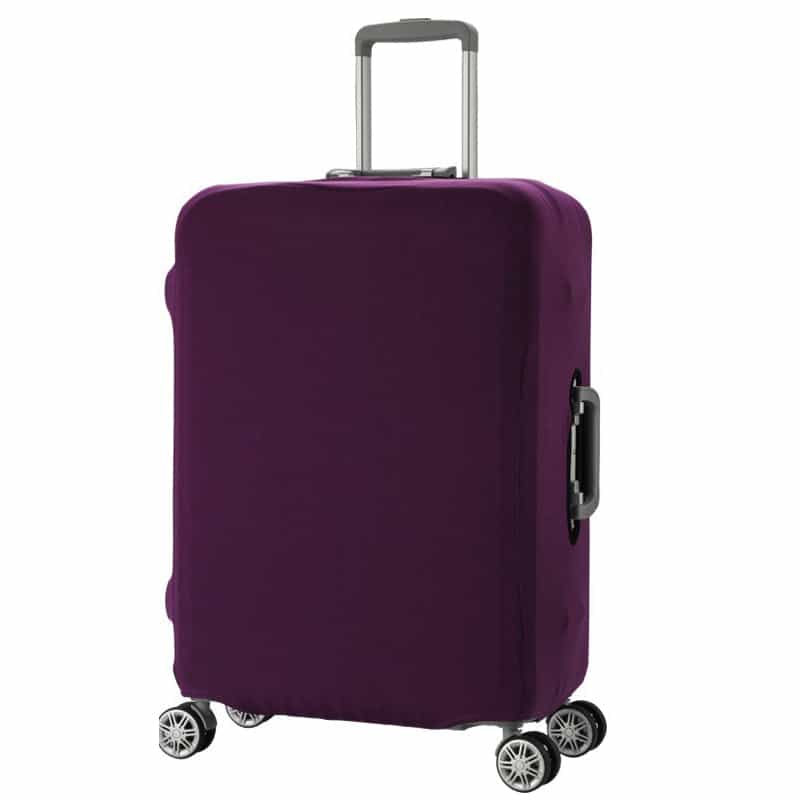
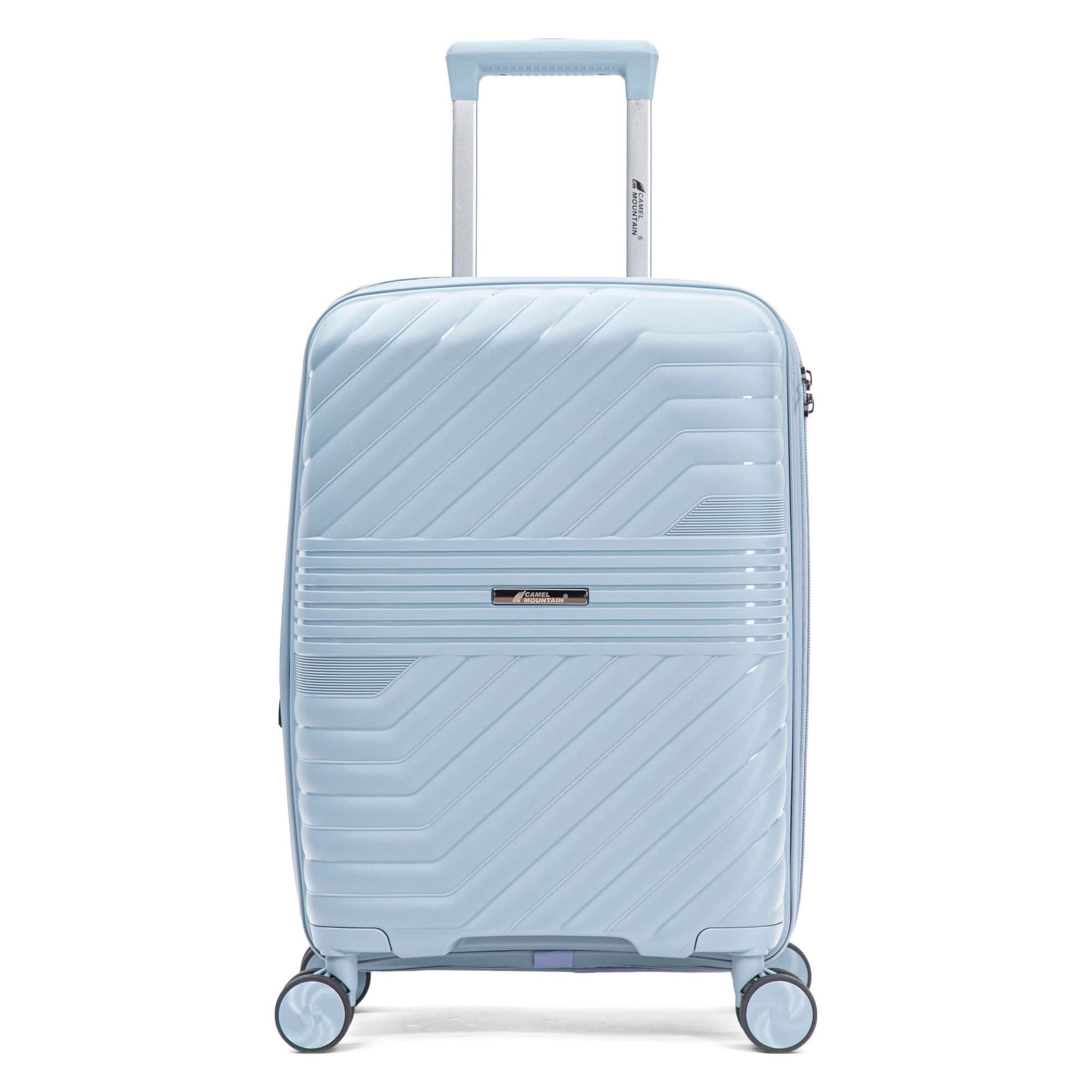
On some cheap tickets the carry-on itself costs extra, and some airlines allow only a small under-seat bag. Our guide does a carry-on count as baggage explains the differences between airlines, and if you're flying with a carry-on only, we also have a guide to packing a carry-on for a week. Looking for a new carry-on? All our carry-on suitcases and organizers and packing cubes are on the site.
Products in this guide
Frequently asked questions
Can you put a power bank in your checked suitcase?
No. Under IATA guidelines, power banks and spare batteries are allowed only in cabin baggage. So before you check your suitcase, make sure no battery was left inside.
Where should you put your laptop?
In the carry-on or the backpack that boards with you. IATA recommends keeping electronic devices in cabin baggage, and the chance of breakage or theft is also smaller when the laptop is with you.
What if your carry-on ends up being sent to the hold?
It happens on full flights. Before you hand it over, take out power banks, medication, documents and valuables and move them to the bag that stays with you.
How many changes of clothes should go in the carry-on?
One set per traveler is usually enough: a shirt, underwear and socks, and a swimsuit for a summer vacation. That way, even if your suitcase is a day late, you can start your vacation.
Where do perfumes and creams go?
Bottles of up to 100 ml can go in the carry-on under security rules, and anything larger goes in the big suitcase, tightly closed and in a bag or a toiletry bag.