

Water-Repellent or Water-Resistant? How to Choose a Winter Backpack
October 23, 2026

A water-repellent bag handles a short shower, like the walk from the car to the office, but in prolonged rain water eventually seeps in through the zippers. A water-resistant bag, made of fabric that doesn't let water through, and ideally with a rain cover, suits people who spend a lot of time outdoors, ride a bike or scooter, or carry a laptop in any weather.
The difference between water-repellent and water-resistant
| Water-repellent | Water-resistant | |
|---|---|---|
| What happens to the fabric | Drops slide off it and aren't absorbed right away | The fabric itself doesn't let water through |
| Short shower | Holds up | Holds up |
| Prolonged rain | Water slowly seeps in through the zippers and seams | Holds up much better, especially with a rain cover |
| Submersion in water | No | No. It's not a diving bag |
An important point to understand: even with very good fabric, the zippers are where water gets in first. A water-repellent bag isn't sealed, and you can move around with it in the rain, just not for long. And a water-resistant bag isn't meant to go into deep water either.
Which one suits you
- Short walks, car, public transport: water-repellent is enough. Most of the time the bag is indoors, and the rain exposure is a matter of minutes.
- Long walks on foot, waiting at outdoor stops: water-resistant is better, or water-repellent with a rain cover.
- Bikes and scooters: water-resistant with a rain cover. When riding, the rain comes at an angle, and the bag also gets splashed from the road.
- Winter hikes: water-resistant, with a bag inside for a change of clothes.
Most of our backpacks are water-repellent, and that's enough for most people on most days. Those who need more will find the resistant models in the water-resistant backpacks category.
What to look for in a winter bag
- The fabric. Thick, dense fabrics, like 1680D ballistic Cordura, resist both water and abrasion better. Our Roxy backpack, for example, is made of 1680D ballistic Cordura.
- A rain cover. An extra layer that pulls out and covers the whole bag, including the zippers. With the Roxy it comes with the bag.
- Zippers. A zipper covered by a fabric flap, or a zipper facing your back, is less exposed to rain.
- A padded laptop compartment inside the bag, not in the outer pocket. That way there are more layers between the laptop and the rain.
- A side bottle pocket. A bottle leaking inside the bag soaks things more than any rain.
How much capacity you need in winter
In winter the bag carries more than in summer: a folding umbrella, a sweater you took off in the middle of the day, sometimes a spare pair of socks. So it's worth choosing a bag slightly bigger than what's enough for you in August. If a 15-liter bag is full to the brim in summer, in winter it will only close by force, and a zipper closed by force is also one that water gets through easily. A bag with expandable capacity solves this: small on a normal day, big when needed.
How to keep your laptop dry even in a water-repellent bag
- The laptop goes in the padded compartment against your back. That's the most protected side.
- On rainy days, add a laptop sleeve, or at least a plastic bag, inside the compartment.
- Chargers and documents go in an organizer or a closed pouch.
- When you arrive, open the bag and let it dry open at room temperature.
If you're choosing a bag mainly for your laptop, we have a complete guide to choosing a laptop backpack, and for those who carry it to work every day, a guide to business backpacks.
Three of our water-resistant bags, for three kinds of days
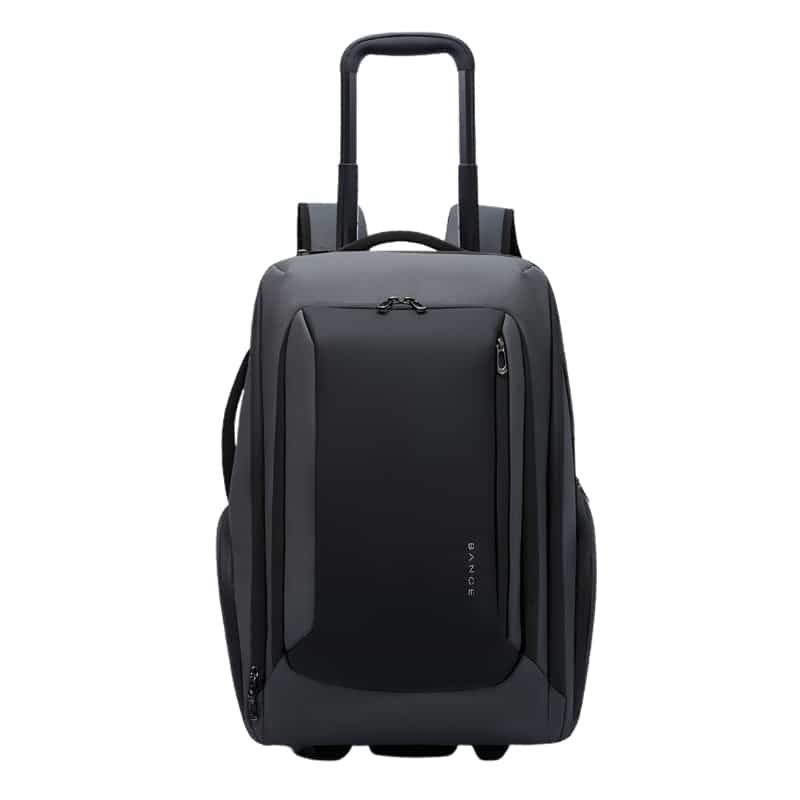
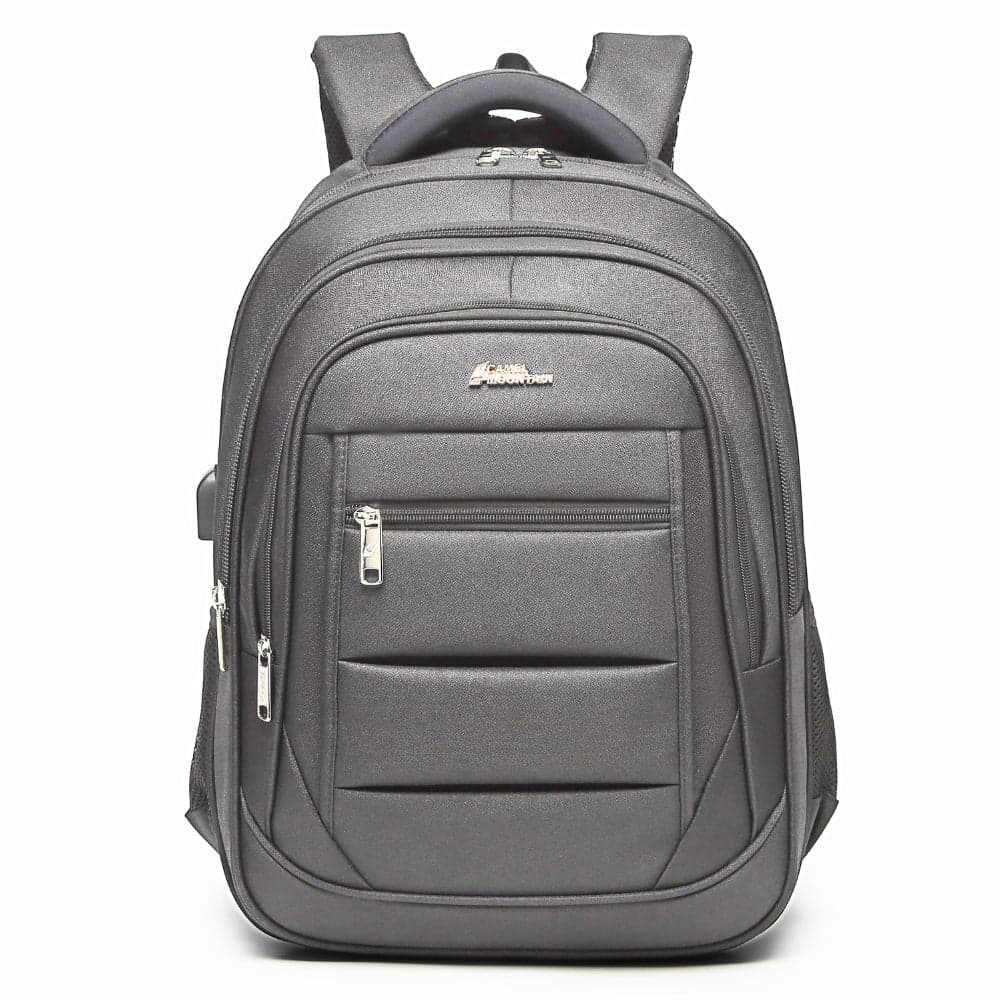
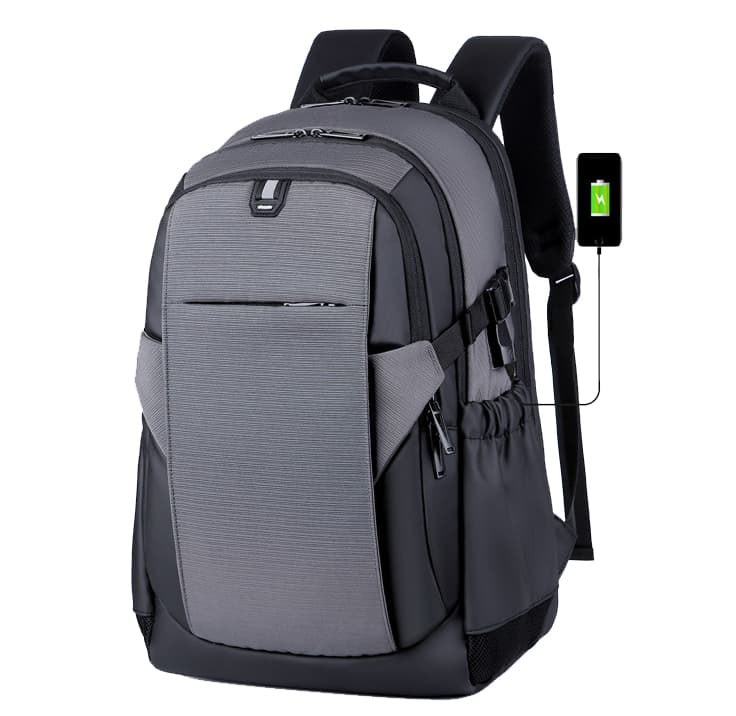
- Roxy, 22 liters: 1680D ballistic Cordura, metal zippers, a rain cover that comes with the bag and a padded compartment for laptops up to 15.6 inches. For work and study, when the commute includes walking outside.
- Electron, 45 liters: water-resistant Oxford fabric, laptops up to 17 inches, three main compartments, 1.45 kg. For people who carry a lot, and for travel.
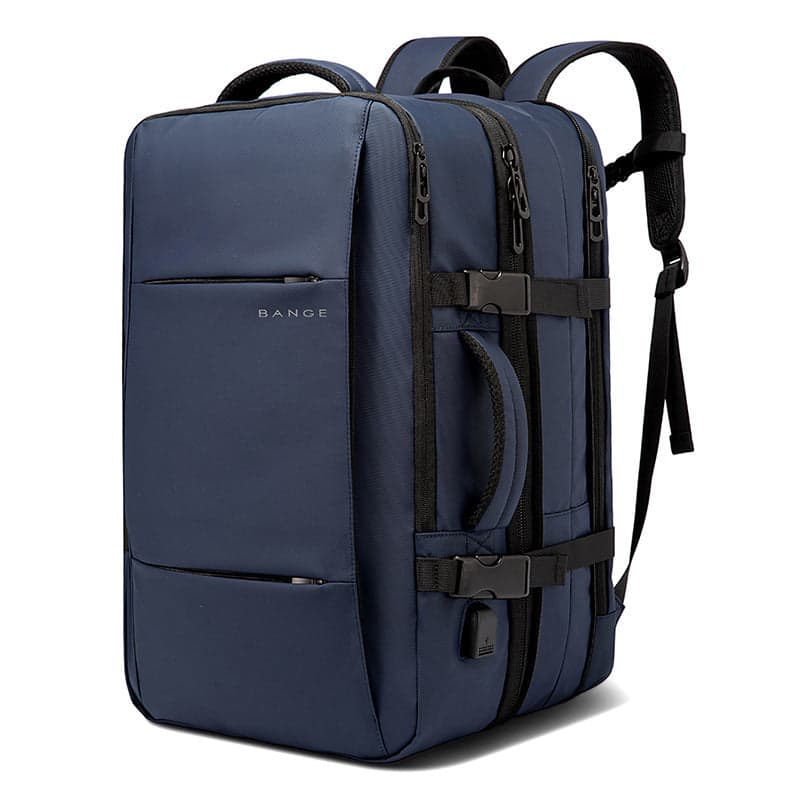
- Urbanism Deluxe: waterproof nylon, laptops up to 15.6 inches, capacity that expands from 36 to 57 liters and a weight of 880 grams. For people who go from the office to the gym or a trip in a single day.
The details are taken from the product pages. The table at the top of the page compares all our water-resistant bags side by side, with today's stock.
Three common mistakes
- Thinking water-repellent means sealed. It doesn't. In half an hour of rain, whatever is next to the zipper will get wet.
- Putting the laptop in the front pocket. It's the most exposed to rain and knocks.
- Shutting a wet bag in the closet. A bag closed while wet may start to smell. Dry it first, open.
And for choosing a backpack in general, by use and size, see the backpack buying guide.
Products in this guide
Frequently asked questions
Can I walk in the rain with a water-repellent bag?
Yes, for a short time. The fabric doesn't absorb water right away, but it isn't sealed, and in prolonged rain water slowly seeps in through the zippers. For the walk from the car to the office it's enough. For half an hour outside, a water-resistant bag or a rain cover is better.
Does a water-resistant bag protect the laptop even in heavy rain?
It protects much better than a water-repellent bag, especially with a rain cover and with the laptop in the padded compartment against your back. What no backpack can do is withstand submersion, so don't set it down in a puddle.
What is a bag rain cover?
A cover made of waterproof fabric that pulls out of a pocket in the bag and stretches over all of it, including the zippers. It seals the bag's weak points. On some bags it comes included, like on our Roxy backpack.
What do I do when my backpack gets wet?
Take everything out, open all the compartments and leave the bag to dry open at room temperature. Don't shut it wet in a closet, because then it may start to smell.


